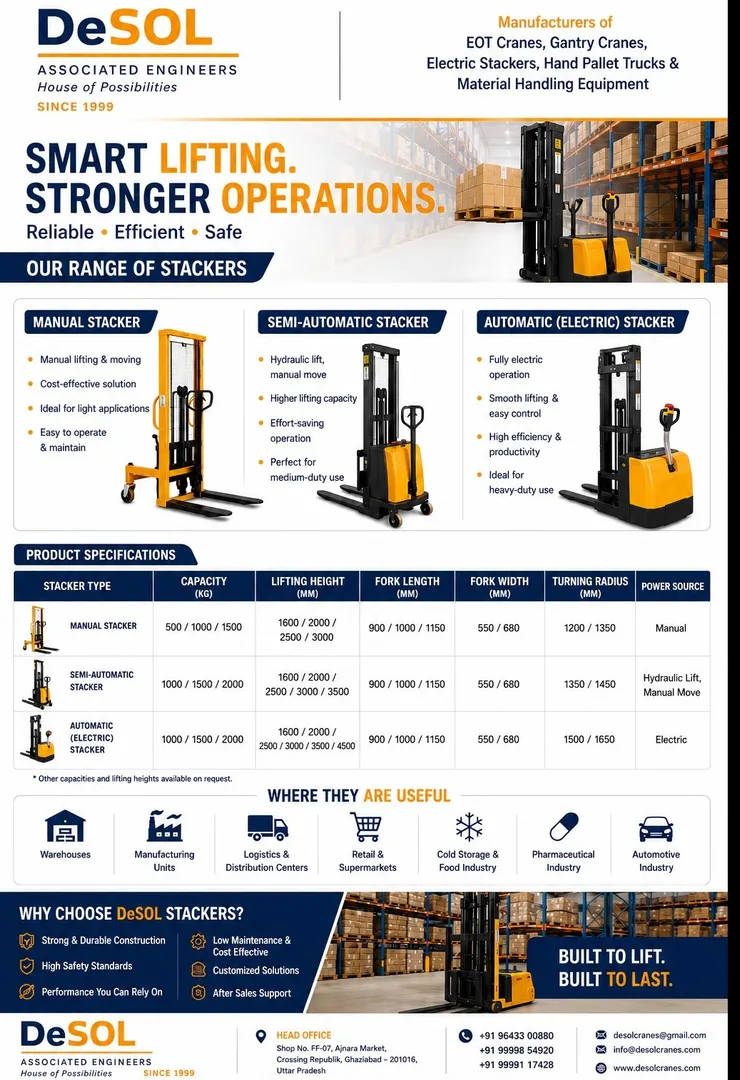
Discover everything about Semi Electric Stackers including benefits, applications, price, maintenance, buying guide, and safety tips for Indian industries.
A Semi Electric Stacker combines electric-powered lifting with manual movement, making it an economical solution for warehouses and factories that need efficient pallet stacking without the cost of a fully electric stacker. It is ideal for short-distance material handling, reduces operator fatigue, improves productivity, and is widely used across logistics, manufacturing, pharmaceuticals, food processing, and retail warehouses. Current market demand is rising as Indian warehouses seek cost-effective automation.
Table of Contents
- What is a Semi Electric Stacker?
- How Does a Semi Electric Stacker Work?
- Key Features
- Benefits
- Applications
- Industries Using Semi Electric Stackers
- Semi Electric vs Manual Stacker
- Semi Electric vs Fully Electric Stacker
- Buying Guide
- Safety Guidelines
- Maintenance Tips
- FAQs
- Contact Desol Cranes
What is a Semi Electric Stacker?
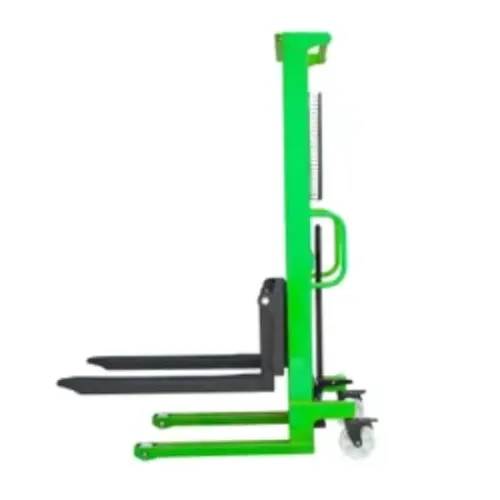
A Semi Electric Stacker is a material handling machine designed to lift, stack, and position palletized loads. The lifting mechanism is powered by an electric hydraulic system, while horizontal movement is performed manually by the operator.
This combination provides an affordable balance between manual stackers and fully electric stackers, making it suitable for businesses that need frequent lifting but relatively short travel distances.
Quick Definition (Featured Snippet Optimized)
A Semi Electric Stacker is a warehouse lifting machine that uses battery-powered hydraulic lifting while being manually pushed by the operator. It improves productivity, reduces manual effort, and offers a cost-effective alternative to fully electric stackers.
How Does a Semi Electric Stacker Work?
The operating principle is straightforward:
- Position the stacker in front of the pallet.
- Insert the forks beneath the pallet.
- Press the electric lift control.
- The battery powers the hydraulic pump to raise the load.
- Manually push or pull the stacker to the required position.
- Lower the pallet using the control lever.
This design reduces physical strain during lifting while keeping equipment costs lower than fully powered models.
Key Features of a Semi Electric Stacker
FeatureDescriptionElectric Hydraulic LiftSmooth and effortless liftingManual MovementLower purchase and maintenance costsRechargeable BatteryReliable lifting performanceHeavy-Duty MastStable operation under loadSafety Braking SystemImproved operator controlCompact DesignSuitable for narrow aislesErgonomic ControlsEasy and comfortable operation
Why Businesses Choose Semi Electric Stackers
Modern warehouses are under pressure to improve efficiency while controlling costs. Semi electric stackers provide a practical middle ground by reducing manual lifting effort without the higher investment required for fully electric equipment. They are especially well suited to facilities with moderate stacking frequency and short travel distances.
Benefits of a Semi Electric Stacker
1. Higher Productivity
Electric lifting speeds up stacking operations compared with manual hydraulic stackers.
2. Lower Operating Costs
Because travel is manual, maintenance and energy costs are generally lower than for fully electric stackers.
3. Reduced Operator Fatigue
Electric lifting eliminates repeated manual pumping, helping operators work more comfortably during long shifts.
4. Improved Workplace Safety
Controlled lifting reduces sudden load movement and contributes to safer material handling when used correctly.
5. Better Space Utilization
Semi electric stackers can help maximize vertical storage by placing pallets on higher racking levels.
Common Applications
Semi electric stackers are widely used for:
- Warehouse pallet stacking
- Factory material movement
- Loading and unloading operations
- Inventory storage
- Production line support
- Distribution centers
- Retail back-end warehouses
- Cold storage facilities
- Pharmaceutical warehouses
- FMCG distribution centers
Industries That Benefit
Manufacturing
Transport raw materials and finished products efficiently.
Automobile Industry
Handle components and spare parts safely.
Pharmaceutical Industry
Move palletized medicines and packaging materials with precision.
Food & Beverage
Support hygienic warehouse operations.
Logistics & Warehousing
Improve pallet handling speed and optimize storage.
Engineering & Heavy Industry
Move machine components and industrial equipment safely.
Latest Market Trends (2026)
Demand for semi electric stackers continues to grow as Indian warehouses invest in affordable material handling equipment. Businesses are increasingly choosing mid-range models that balance capacity, lift height, and cost, while adoption is being driven by warehouse expansion, e-commerce growth, and the need to reduce manual handling.
Keywords