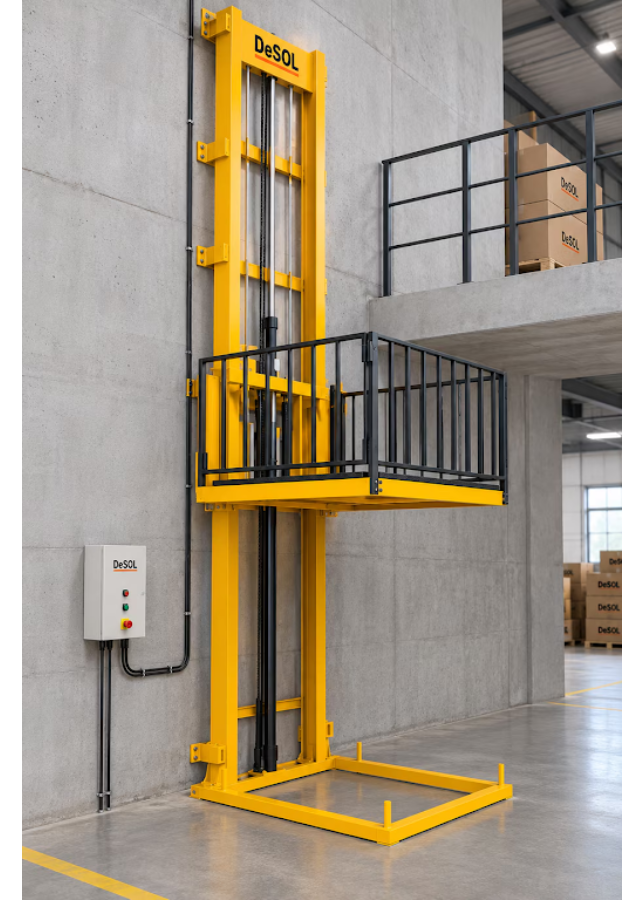
Material movement between floors can gradually become a major operational bottleneck. Businesses often adapt by using manual handling, temporary lifting arrangements, or indirect movement routes until increasing production volumes make these methods difficult to sustain. Recognizing the right time to evaluate a Hydraulic Goods Lift can help facilities plan vertical handling more systematically.
Manufacturing and warehouse operations in Gurugram, Haryana may benefit from reviewing their vertical movement processes when expansion increases pressure on available floor space.
Frequent Manual Movement Between Levels
One of the clearest indicators is repeated movement of materials up and down between floors.
When employees regularly carry boxes, components, tools, or production materials between levels, the process can consume substantial time and create unnecessary handling.
A dedicated goods lift establishes a defined route for vertical material transfer.
Mezzanine Storage Is Becoming Difficult to Use
Mezzanines can expand usable storage without requiring a larger building, but their value decreases when materials cannot be moved efficiently.
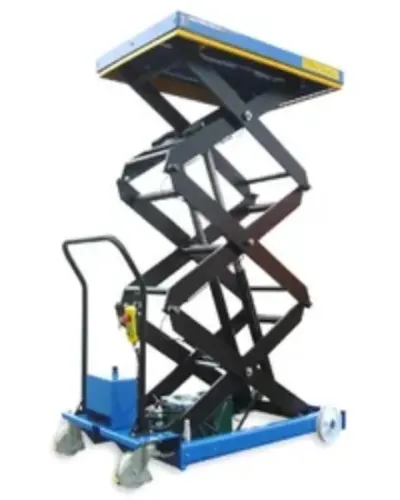
If upper-level storage is underused because transferring heavier goods is inconvenient, a Hydraulic Goods Lift may help connect storage and ground-level operations.
Production Is Split Across Multiple Floors
Some factories operate machining, assembly, storage, packaging, and dispatch activities at different elevations.
As production volumes increase, moving components between these departments can become increasingly complicated.
A properly positioned lifting point can support more predictable material flow.
Existing Handling Methods Create Delays
Track how long employees wait for materials to arrive from another level.
Repeated delays may indicate that the current movement method has become a constraint on throughput. The issue may not justify changing the entire production layout, but it could justify dedicated vertical handling equipment.
Load Sizes Are Increasing
Handling methods that worked for lightweight materials may no longer be suitable when load dimensions and weights increase.
Before selecting equipment, document:
- Maximum load weight
- Typical load weight
- Platform size required
- Number of operating levels
- Lifting frequency
- Loading method
- Available installation space
These parameters are essential for developing an appropriate specification.
Your Facility Is Preparing for Expansion
Equipment decisions are often more effective when made before production expansion rather than after congestion becomes severe.
Businesses expecting increased storage volume, additional production capacity, or greater inter-floor movement can evaluate lifting requirements during the planning stage.
Desol Associated Engineers works with industrial lifting applications where capacity, movement, site conditions, and workflow need to be considered together.
For Gurugram facilities evaluating a Hydraulic Goods Lift, readiness is less about reaching a specific production volume and more about recognizing repeated inefficiency in vertical material movement.
When manual transfer, underused mezzanine space, inter-floor delays, increasing load weights, and future expansion begin affecting operations, a dedicated goods lifting system becomes worth evaluating. A detailed site assessment can then determine appropriate capacity, platform dimensions, travel height, loading arrangement, controls, and installation requirements.