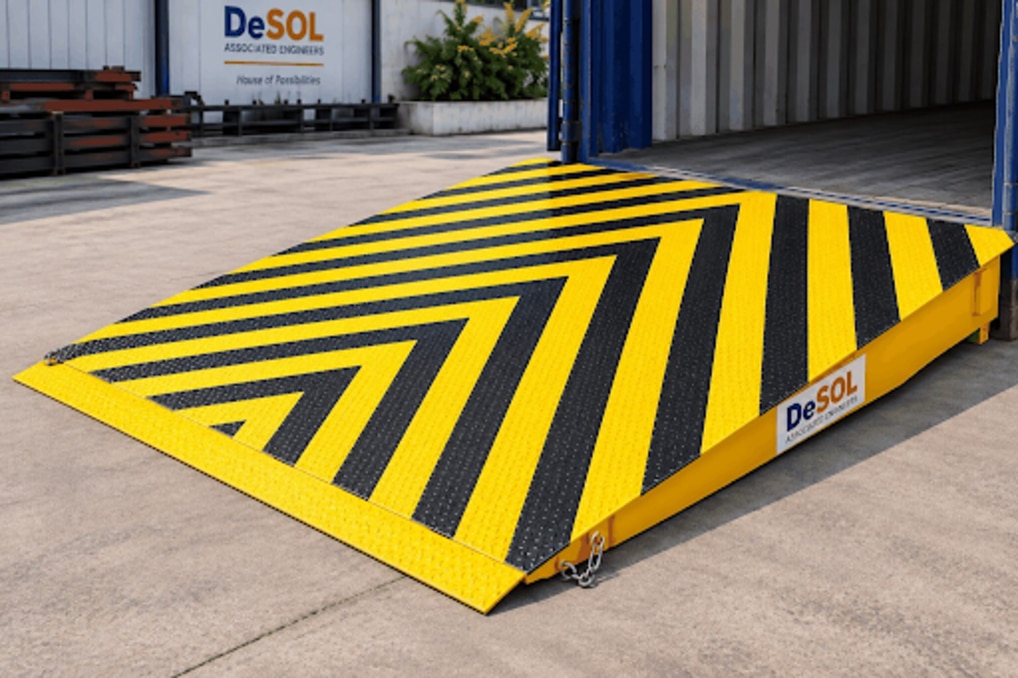
Flexible loading fails when a ramp fits the vehicle but not the height, wheel loads, approach path or ground conditions. By the end, you will be able to measure the site, calculate the working gradient, verify equipment compatibility, run a safe setup sequence and compare a portable ramp with fixed loading alternatives.
Key takeaways
- Measure ground-to-floor height and straight approach distance before ordering.
- Check the ramp gradient and both end transitions for safe access.
- Secure the ramp before use and follow a defined removal sequence.
- Match ramp capacity, width and lip design to forklift traffic.
Measure the Site Before You Choose Ramp Length
Measure the vertical difference and the straight run before you order a portable loading ramp: those two figures determine whether its incline is usable. Record ground-to-container-floor height from the firm approach surface to the finished trailer or container floor, not to the bumper or chassis.
| Measurement | How to take it | What a mismatch causes |
|---|---|---|
| Ground-to-container-floor height | Measure from the approach surface to the vehicle floor | A ramp suited to a low trailer becomes too steep at a high container |
| Available approach distance | Measure the unobstructed horizontal run, including space for the ramp’s lower end | The required ramp length does not fit, forcing a sharper incline |
| Doorway width and clear travel width | Measure the opening, ramp deck, wheel path and turning clearance | Pallet-jack wheels hang up, or forklift tyres strike the edge |
| Vehicle geometry | Record wheelbase, tyre diameter, axle position and load width | The machine may bottom out, lose clearance or require excessive steering |
| Interface surfaces | Check trailer floor, dock edge, landing surface and ramp lip for bearing length and strength | Deformation, separation or a raised lip interrupts travel |
Use these portable loading ramp measurements before comparing suppliers:
- Select ramp length from the height and available run, then confirm the resulting gradient with the equipment manufacturer’s limit.
- Leave room for square approach, controlled braking and turning outside the incline; do not measure only the doorway.
- Confirm fork pockets, lifting eyes, towing points or wheels match your available handling equipment and storage space.
- Verify the upper lip bears fully on the vehicle floor and that the lower end sits on a firm, level surface.
Calculate the Gradient and Check the Two End Transitions
Use the actual loading height, not the ramp’s nominal rating, to test the route. The ramp gradient calculation is rise divided by horizontal run, multiplied by 100 for the percentage: (container-floor height − ground height) ÷ run × 100. The angle is arctan(rise ÷ run).
Ramp length versus slope matters: the same ramp becomes steeper when the upper surface is higher or the available run is shorter.
- Calculate the gradient at every truck or container height you plan to serve, then compare it with the forklift or pallet truck manufacturer’s permitted gradeability.
- Check the vehicle’s approach angle, breakover angle and departure angle. A long-wheelbase forklift, low undercarriage or trailer underride guard can strike the ramp even when the slope passes the gradeability check.
- Inspect the lower lip where it meets the ground and the upper lip where it meets the truck or container. Each transition must be smooth, aligned and supported; a sharp step can stop pallet-jack wheels or pitch a forklift load.
- Confirm the ramp lip and bearing length. The upper end needs enough supported surface on the trailer or container floor to prevent tipping, sliding or edge damage.
- Measure clear travel width between curbs, not overall ramp width. Include pallet overhang, tyre width and steering clearance; raised edges can protect wheels while catching a wide load.
Repeat the check with the largest and smallest planned vehicle. A setup that suits a low-bed trailer can remain unusable at a high dock.
Use a Positioning, Securing and Removal Sequence
Use the portable ramp operating sequence for every trailer, even when the same vehicle returns each day. The ramp’s weight must never serve as the trailer’s only restraint.
1. Before positioning, clear the approach and confirm the trailer floor height matches the planned gradient. Apply the trailer wheel chocks and restraints required by your site procedure before bringing the ramp into contact with the vehicle.
2. Position the ramp squarely with the trailer doorway and centre the wheel path. Check that the upper lip has full bearing on the trailer floor or dock edge, the lower end sits flat, and the ramp width leaves clearance for tyres, pallet-jack wheels and turning corrections.
3. Complete the portable ramp inspection checklist before traffic starts. Examine welds, deck plates, lips, hinges, fork pockets, lifting eyes, locking devices and contact points for cracks, deformation, loose parts or contamination.
4. Confirm ramp anchoring and anti-slip surface controls are effective. Remove oil, mud, snow, ice, loose packaging and standing water; blocked drainage or a contaminated deck can destroy traction even when the ramp’s dry-condition capacity is adequate.
5. During loading, keep the trailer restrained and prevent abrupt braking, steering or reversing on the ramp. Stop immediately if the lip lifts, the ramp shifts, the trailer moves, wheels hang at a transition or the deck loses traction.
6. After unloading, remove traffic, release restraints only when the ramp is clear, and inspect both interfaces again. Use the approved towing, lifting or fork-handling points to remove the ramp, then store it on stable ground where dirt and water cannot damage its contact surfaces.
Match Capacity and Forklift Geometry to the Planned Traffic
A ramp is acceptable only when its rating covers the actual total rolling load and the worst local forces produced by the equipment. Add the forklift, operator, attachment, pallet and goods, then ask whether the stated capacity includes the ramp’s own weight and applies to dynamic forklift travel.
Obtain the manufacturer’s limits for each load condition, not one headline figure:
- Total rolling load: the combined weight moving over the deck.
- Forklift axle load and concentrated wheel load: the maximum load carried by one axle and one wheel or tyre contact area.
- Dynamic loading: the permitted forklift speed and the conditions for braking, steering, bumps and entry or exit impacts.
Compare your measured figures with those limits. A forklift below the nominal capacity can still overload the deck if solid tyres place a high concentrated wheel load on a short clear span. Do not accept a rating that lacks its load definition, axle distribution, wheel-contact assumption or dynamic-use condition.
Check the physical fit separately. Confirm the minimum tyre diameter and wheel spacing, then compare them with the deck, support spacing and transition geometry. Measure the clear travel width rather than overall width; curbs reduce it and can catch pallet overhangs. Verify ground clearance and turning clearance for the forklift, attachment and load.
Keep the forklift square to the ramp and use the specified forklift speed. Avoid turning or abrupt braking on the incline unless the supplier has rated the ramp for those forces; structural capacity does not replace an operating rule.
Choose the Loading System That Fits the Operation
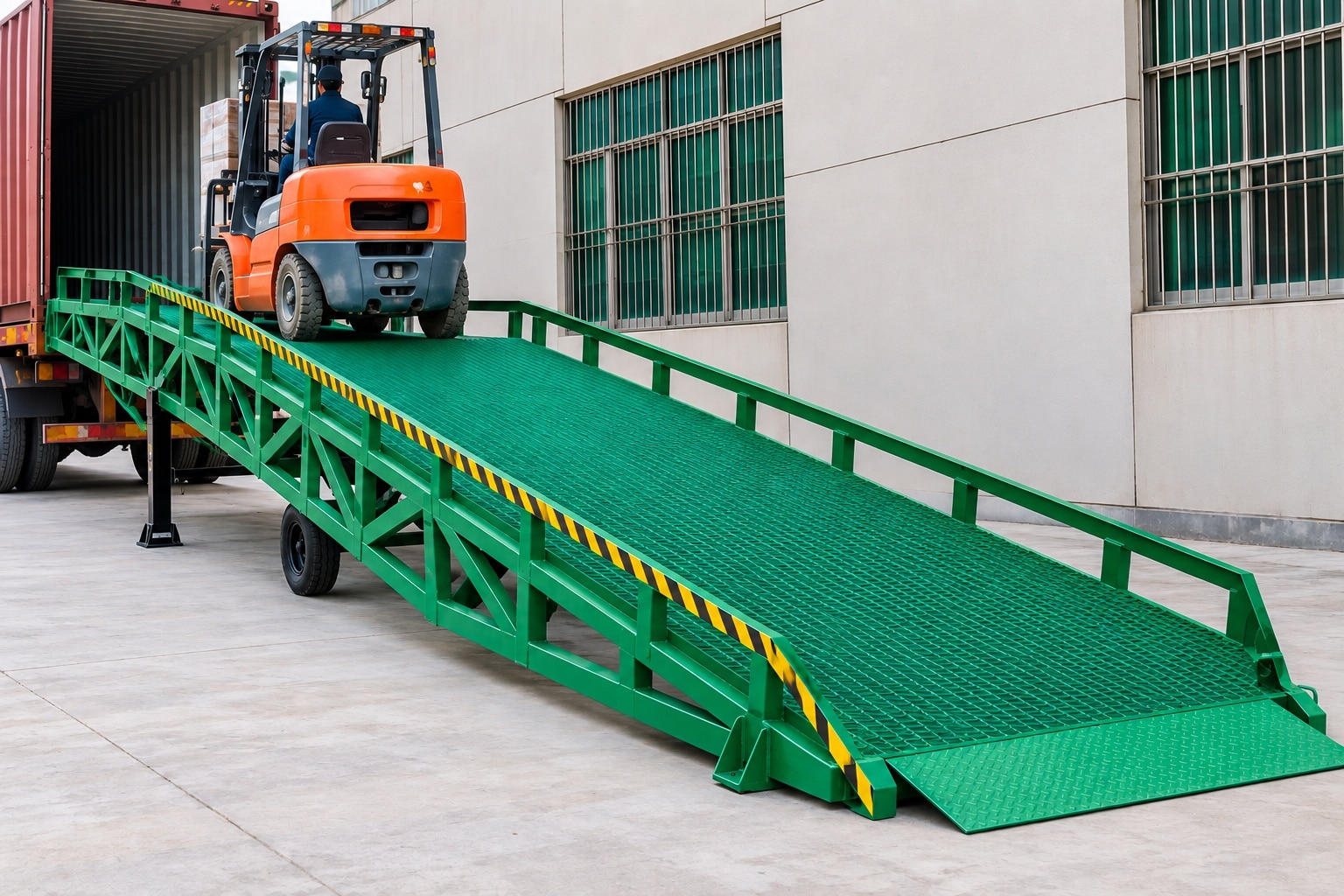
Choose a portable ramp when loading points change, vehicles vary in height, or installing permanent dock equipment is impractical. The decision between portable ramp versus fixed dock leveler, hydraulic dock leveler and dock plate, portable yard ramp and forklift access bridge depends on traffic, height, ground and handling equipment.
| Option | Best fit | Main limitation |
|---|---|---|
| Portable ramp | Intermittent container or truck access at changing positions | Needs secure placement, suitable ground and storage space |
| Fixed dock leveler | High-volume traffic at one permanent dock | Cannot serve sites without a fixed dock |
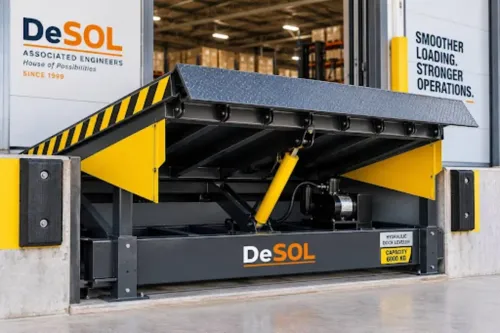
| Hydraulic dock leveler | Frequent loading where powered height adjustment saves labour | Requires installation, power and maintenance |
| Dock plate | Small height gap and short, light-duty transfers | Not a substitute for a forklift-rated ramp |
| Portable yard ramp | Moving forklift traffic from ground to multiple trailers | Needs a stable landing area and more approach distance |
| Forklift access bridge | Bridging a defined doorway or platform gap | Works only when width, bearing and edge geometry match |
Confirm the choice with a layout drawing showing floor height, approach run, doorway width, turning clearance, storage space and the ramp’s height adjustment mechanism. Request the rated total rolling load, axle load, concentrated wheel load and dynamic forklift rating, plus ground-bearing limits and end-transition details.
The file should also contain trailer-restraint instructions, inspection criteria, maintenance intervals and operator-training rules. Desol Associated Engineers can help clarify which drawing and load schedule match the intended traffic rather than treating every ramp as interchangeable.
Related products
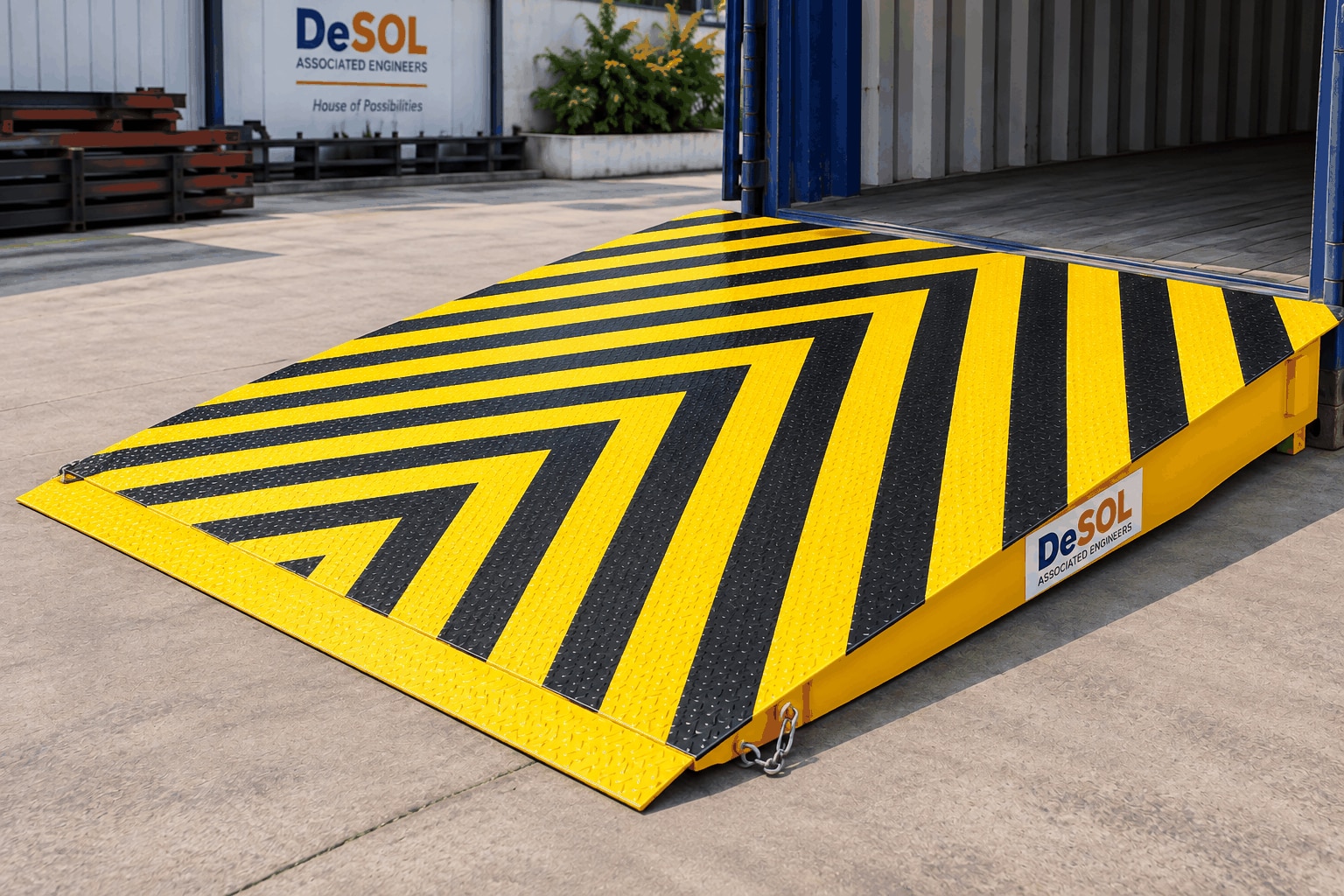 | Material Handling Equipment / Mobile Loading Ramp Portable Ramp for Container Loading and Unloading DeSOL Portable Ramp is a heavy-duty mobile loading and unloading solution designed for efficient movement of goods, forklifts and material handling... View product → |
 | Material Handling Equipment / Loading Ramp Portable Container Ramp The Portable Container Ramp by DeSOL Associated Engineers is a heavy-duty material handling solution designed to provide safe... View product → |
Frequently asked questions
What should you measure before choosing a portable loading ramp?
Measure the vertical difference from the firm approach surface to the finished trailer or container floor, then measure the available straight run.
How do you check whether a ramp length is suitable?
Calculate the gradient from the height difference and ramp length, then inspect both the upper and lower end transitions for abrupt changes.
How should you position and secure a portable loading ramp?
Follow a defined sequence: position the ramp on firm ground, align both ends, secure it against movement, inspect the setup, and remove it only after traffic stops.
How do you match a ramp to planned forklift traffic?
Compare the ramp’s rated capacity, usable width and end geometry with the forklift’s loaded weight, wheel layout, tyre size and expected traffic pattern.