
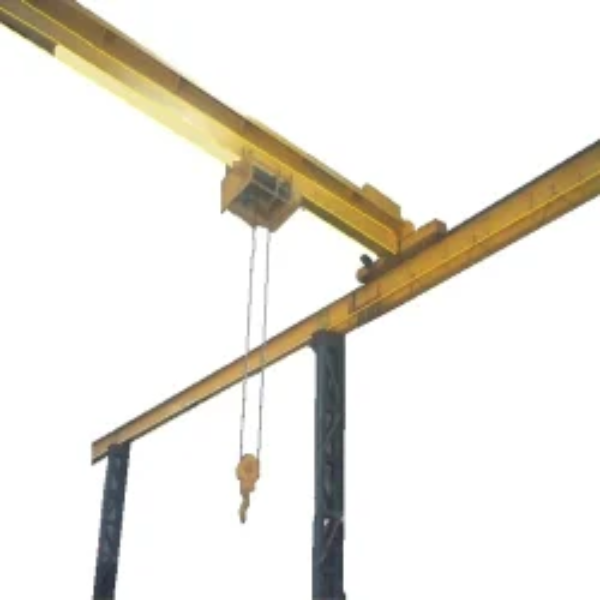
A Single Girder EOT Crane can provide an effective overhead lifting arrangement for many manufacturing, fabrication, maintenance, and warehouse applications. Its suitability, however, depends on much more than identifying a required lifting capacity and requesting quotations.
For industrial businesses in Noida, Uttar Pradesh, preparing accurate technical and site information before procurement can make equipment evaluation considerably more effective.
Establish the Maximum Working Load
Start by identifying the heaviest load the crane is expected to handle during normal operations.
Do not rely on rough estimates. Include the component itself and relevant lifting accessories when determining the working requirement.
Typical load weights are also useful because they help describe the actual operating pattern rather than only the maximum occasional lift.
Measure the Required Span
Crane span depends on the runway arrangement and building dimensions.
Accurate measurements are essential because span influences the structural and mechanical configuration of the crane. Existing factories may also contain columns, utilities, ducts, machinery, and other obstructions that need to be considered.
Confirm the Required Lifting Height
Available building height does not automatically equal usable lifting height.
The required hook position, crane structure, hoist arrangement, roof clearance, load height, and machinery below the crane all influence the effective lifting requirement.
This is particularly important where headroom is limited.
Define How Frequently the Crane Will Operate
A Single Girder EOT Crane used for occasional equipment maintenance experiences different demands from one supporting regular manufacturing activity.
Procurement teams should provide realistic information about operating shifts, expected lifting cycles, typical loads, and production frequency.
This helps establish an appropriate operating specification.
Review Travel and Control Requirements
Think about how operators need to position loads.
Some facilities require straightforward lifting and transfer. Others need controlled positioning around machines or assembly stations.
Lifting speed, cross travel, long travel, and control arrangements should therefore reflect the application rather than being selected independently.
Prepare the Site for Installation
Before ordering, evaluate runway structures, electrical requirements, installation access, floor space for erection activities, and surrounding production equipment.
Planning these conditions early can reduce complications when the crane arrives at the facility.
Evaluate the Complete Proposal
A purchase decision should include more than the crane's headline capacity.
Review technical specifications, structural configuration, hoist details, controls, safety provisions, installation scope, testing, documentation, maintenance requirements, and service support.
Desol Associated Engineers provides crane and material handling solutions for manufacturing and industrial applications where equipment needs to be matched with site and operational requirements.
For businesses in Noida preparing to purchase a Single Girder EOT Crane, documenting load capacity, span, lift height, duty, operating frequency, building dimensions, and material movement requirements before requesting a final specification creates a stronger procurement process.
The objective is not simply to install an overhead crane. It is to establish lifting coverage that supports the plant's actual workflow, provides appropriate load handling capability, and remains practical to operate and maintain as production requirements develop.