Unsafe material movement usually begins before a machine is switched on: the route, load, vehicle, people and equipment have not been assessed as one system. By the end, you will be able to compare handling options, verify capacity and dimensions, and specify the controls that improve throughput without transferring risk to pedestrians or operators.
Key takeaways
- Map every material route before choosing equipment.
- Check load weight, dimensions, centre of gravity, and turning clearance.
- Match dock ramps to the height and access problem.
- Separate pedestrians, vehicles, and suspended loads with physical controls.
Start With a Hazard and Workflow Assessment
Walk the entire material route before selecting equipment, from receiving vehicle to storage, production, and dispatch. A material handling safety assessment must show what moves, who is exposed, where the load changes direction or height, and which task creates the greatest consequence if control fails.
Watch the work during normal production and peak traffic, then ask operators where loads shift, visibility disappears, or shortcuts occur.
Record these observations:
- Track vehicle movement, reversing, turning, ramp travel, and loading-dock approach. Note where forklifts and pedestrians share space; barriers and controlled crossings are stronger controls than floor markings alone.
- Identify falling loads from unstable pallets, damaged packaging, off-centre lifting, raised forks, or suspended loads. Record the load’s shape, centre of gravity, and failure path.
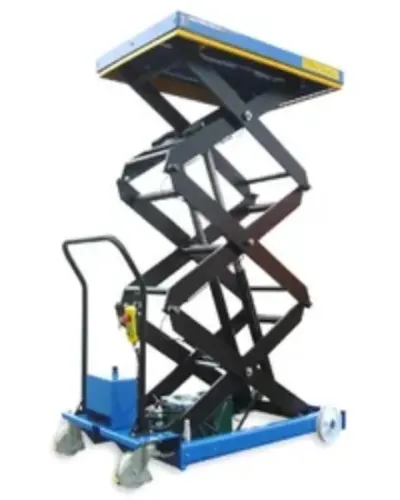
- Mark pinch points at dock-leveler hinges, scissor lifts, powered doors, conveyor transfers, and crane travel paths. Accessible moving parts need guarding or safeguarding, not only warning labels.
- Map struck-by hazards at dock edges, blind corners, trailer interiors, and areas where a crane, forklift, or trolley can enter a person’s space.
- Check whether dockboards slip, trailers move, brakes are set, wheel chocks or vehicle restraints are used, and a safe release procedure exists.
| Hazard evidence | Control the equipment must provide | Failure if omitted |
|---|---|---|
| Pedestrian and vehicle conflict | Physical segregation, barriers, visibility aids, controlled crossings | A reversing vehicle strikes a person |
| Unstable or suspended load | Rated capacity, secure attachment, guarding, exclusion zone | Falling loads hit workers or damage stock |
| Accessible moving mechanism | Fixed guard, interlock, warning signal, safe isolation | Pinch points trap hands or feet |
| Trailer movement at dock | Chocks or positive restraint, brake check, release sequence | Dockboard or leveler shifts during loading |
Verify Capacity, Load Geometry and Physical Fit
A 2,000-kilogram crane does not automatically make a 2,000-kilogram lift safe. Confirm the actual safe working load for the complete setup, then compare it with the load, pallet, lifting attachment, trolley or fork carriage, and packaging together.
Read the equipment nameplate at the operating position; it must identify rated capacity, load centre or configuration limits, and any derating. Treat off-centre loads and dynamic loads from starting, stopping, swinging, or travelling as capacity risks, not minor variations.
A lifting calculation based only on nominal weight misses the reach and geometry that make a load unstable.
Record these dimensions before selecting equipment:
- Load length, width, height, centre of gravity, and lifting-point locations.
- Door and aisle clearances, platform dimensions, lift travel, forklift wheelbase, and turning radius.
- Dock-to-truck height difference, container floor height, ramp length, gradient, and clear width.
- Floor loading capacity, crane runway height, columns, lights, sprinklers, cable trays, and planned future obstructions.
Check the result in the facility, not only on a drawing. Keep at least 3 inches of overhead and 2 inches of lateral clearance around an overhead crane.
On a ramp steeper than 10 percent, a loaded powered truck must travel with its load upgrade; turning space, grip, transitions, and alignment can still make a rated ramp unusable. Reject side-pulling with a crane unless a responsible person has authorised it after verifying stability and capacity.
Match Ramps and Dock Equipment to the Access Problem
Choose a ramp or dock system by access geometry, not rated capacity alone. Set the ramp gradient from the dock-to-ground height and available length; a steep route destabilizes a forklift, while an unnecessarily shallow route consumes staging space.
On an incline greater than 10 percent, a loaded powered industrial truck must travel with its load upgrade.
A portable ramp needs a firm, level landing, adequate edge protection, a non-slip surface, and end plates that cannot shift. Repair oil, ice, standing water, broken decking, and gaps before use; poor grip turns braking and load control into guesswork. Align the ramp with the vehicle so wheels do not climb an edge.
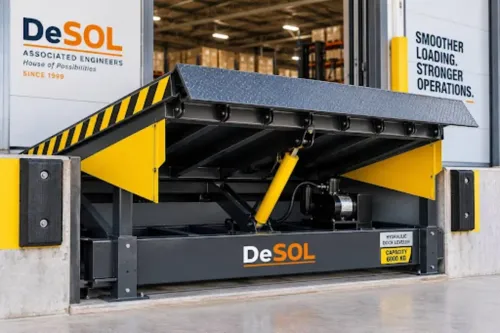
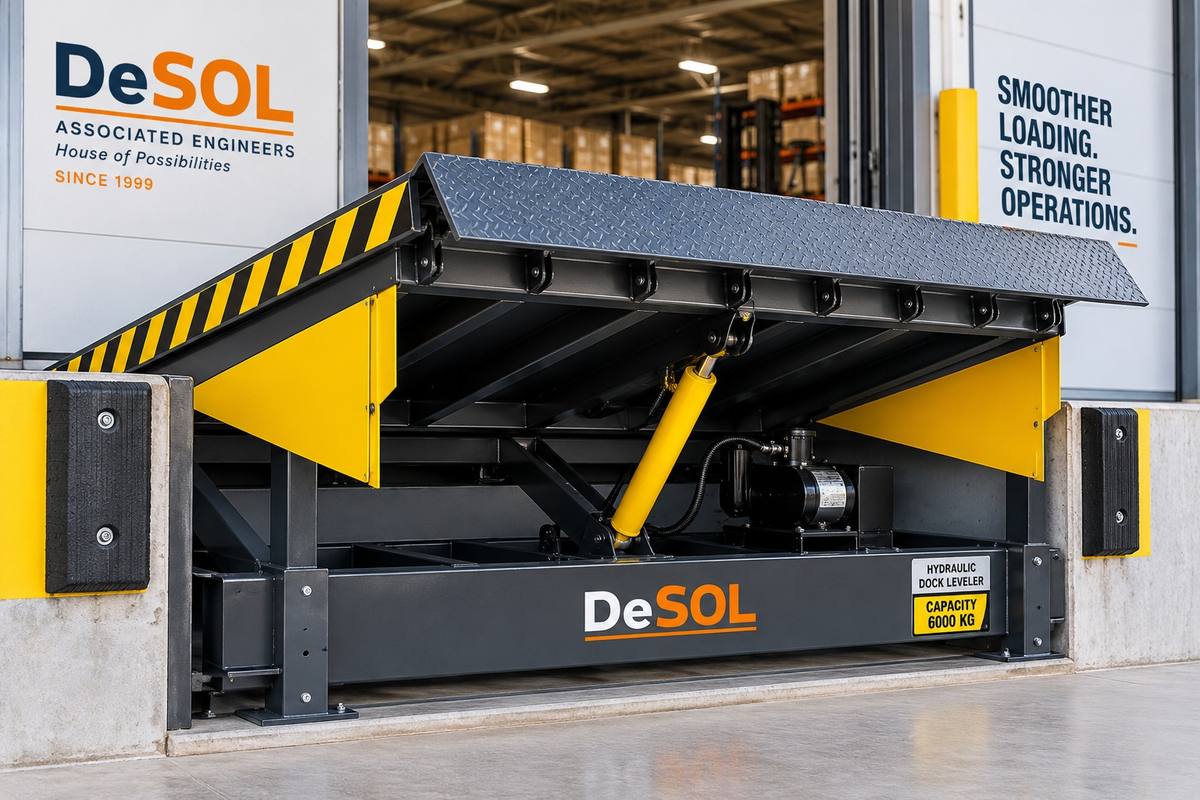
At a dock, dockboard security requires positive protection against slipping, and the trailer must be stopped with brakes set before use. Use wheel chocks or another positive protection method where required. A hydraulic dock leveler bridges a gap but does not control trailer movement, so define restraint, release, and clearance checks.
Measure these before ordering:
- Dock-to-truck height difference and container floor height
- Ramp length, gradient, and clear width
- Forklift wheelbase, turning radius, and approach alignment
- Door opening, dock edge, and platform dimensions
- Floor loading capacity beneath the equipment
Specify interlocks and warning signals with a safe state for power or sensor failure. Guard leveler hinges, lips, and accessible pinch points; a warning label alone does not prevent contact.
Choose the Right Method for Vertical and Suspended Loads
Choose by the load’s path, travel frequency and exposure to people: a goods lift moves loads between levels, while a conveyor moves repeated loads along a fixed route.
| Equipment | Best use | Essential safeguards |
|---|---|---|
| Goods lift | Pallets or containers between floors | Interlocked gates, rated platform, load restraint and no riding unless designed for passengers |
| Conveyor | Continuous, predictable movement; conveyor versus goods lift depends on route and throughput | Guards at nip points, emergency stops, pull cords and controlled access |
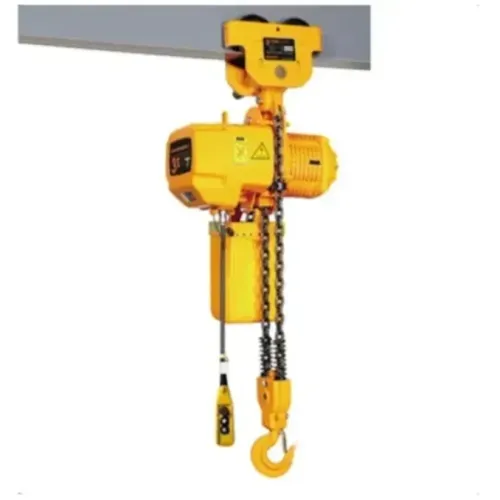
| Hoist | Occasional vertical lifting at one work position | Rated lifting accessories, exclusion zone and stable anchorage |
| Forklift | Short-distance movement with changing destinations | Trained operator, seat belt, pedestrian separation and load backrest |
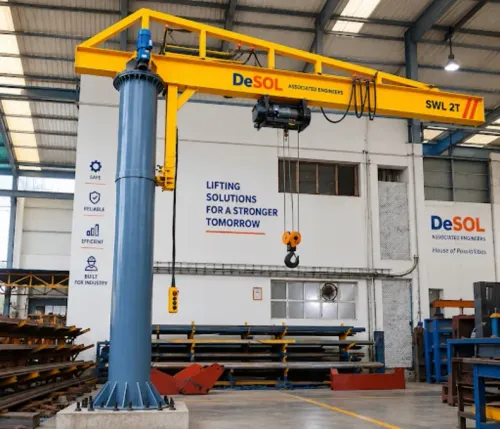
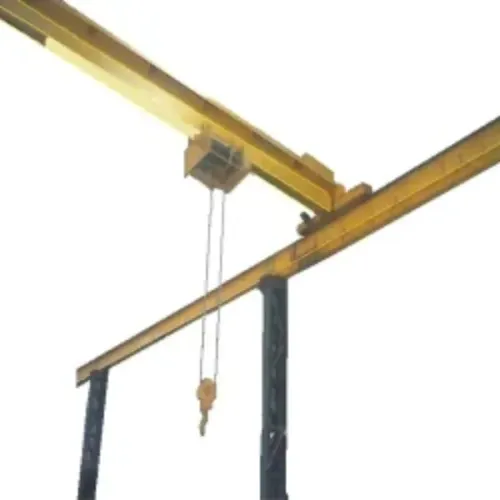
| EOT crane | Heavy suspended loads requiring horizontal travel across a bay | Visible capacity markings, limit devices, pendant controls and a clear lifting zone |
Specify safeguards with the equipment, not after installation. For suspended loads, require wire-rope sling inspection records; remove a sling for ten randomly distributed broken wires in one rope lay, five broken wires in one strand in one lay, kinking, crushing, unstranding, birdcaging or heat damage.
Never use an EOT crane for side-pulling unless a responsible person authorizes it after checking stability and rated capacity.
Set inspection intervals from service conditions: frequent crane inspections run from daily to monthly, and periodic inspections from one to twelve months. Guard dock-leveler hinges, powered doors and scissor tables against accessible moving parts, and protect open dock edges with guardrails, barriers or gates.
Build Traffic Controls Into the Equipment Specification
Specify the traffic layout with the equipment, not after installation. Use physical pedestrian-forklift segregation wherever practicable: guardrails, fixed barriers, separate doors, and one-way vehicle routes are stronger controls than painted walkways.
At open dock edges 4 feet or more above a lower level, add loading dock barriers, gates, or guardrails; a forklift route does not protect pedestrians from trailer gaps or inactive bays.
Require the supplier to define these traffic controls:
- Mark controlled crossing points and give pedestrians a clear line of sight to approaching vehicles.
- Fit vehicle restraints, wheel chocks, dockboards, and brake checks into one release sequence so loading cannot begin while a trailer can move.
- Use interlocks and warning lights that show whether a dock leveler, powered door, restraint, or lift is ready, moving, locked, or faulted.
- Guard accessible hinges, lips, scissor mechanisms, nip points, and other moving parts instead of relying on warning labels.
- Document the traffic management rules, inspection frequency, manual override authority, and recovery steps after a sensor or power failure.
Ask Desol Associated Engineers to confirm a portable ramp’s clear width, edge protection, surface grip, approach alignment, and capacity against the actual forklift and load before it enters a container. A ramp that fits the doorway but forces a sharp turn can create the collision and load-shift risk the new equipment was meant to remove.
Related products
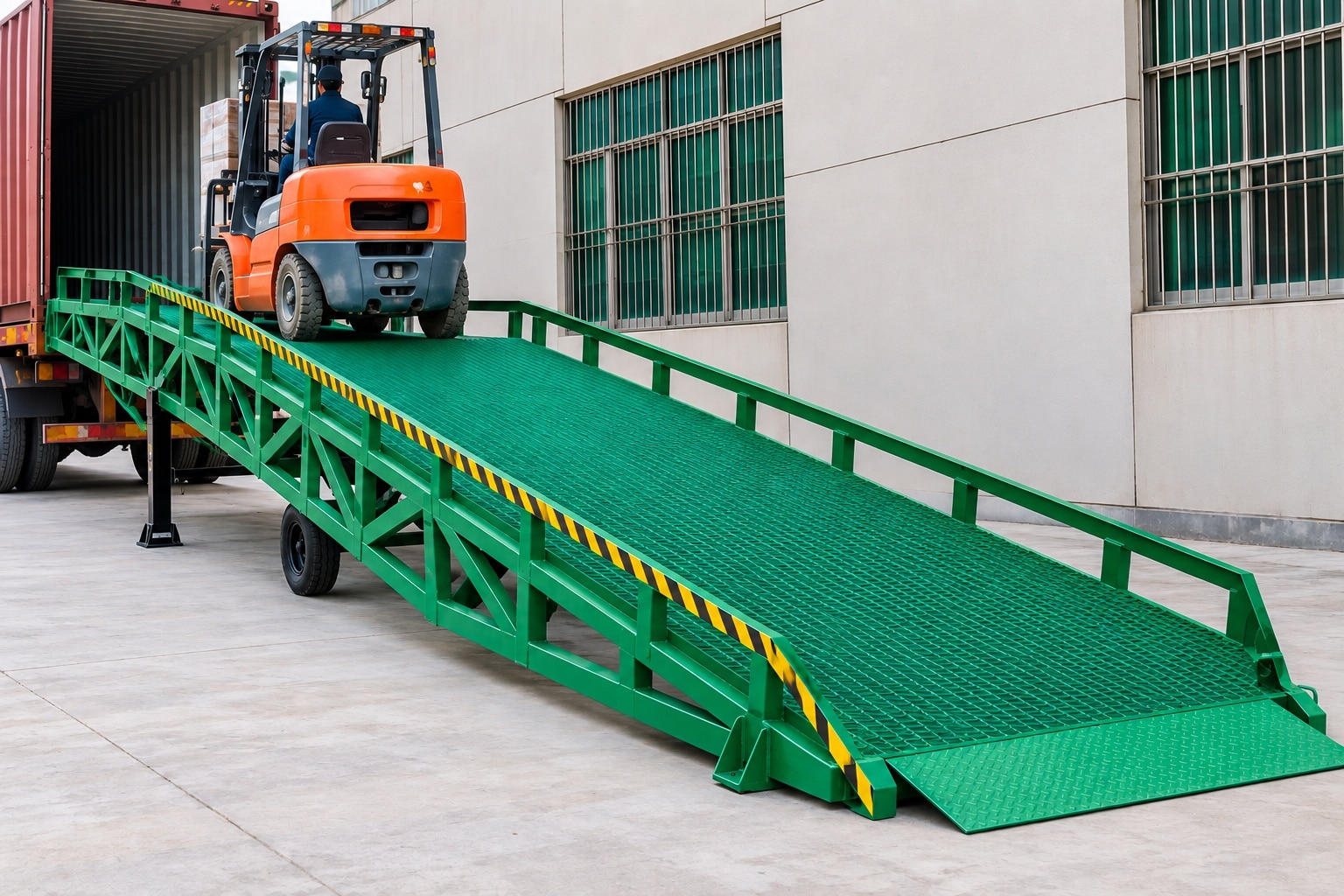 | Material Handling Equipment / Loading Ramp Portable Container Ramp The Portable Container Ramp by DeSOL Associated Engineers is a heavy-duty material handling solution designed to provide safe... View product → |
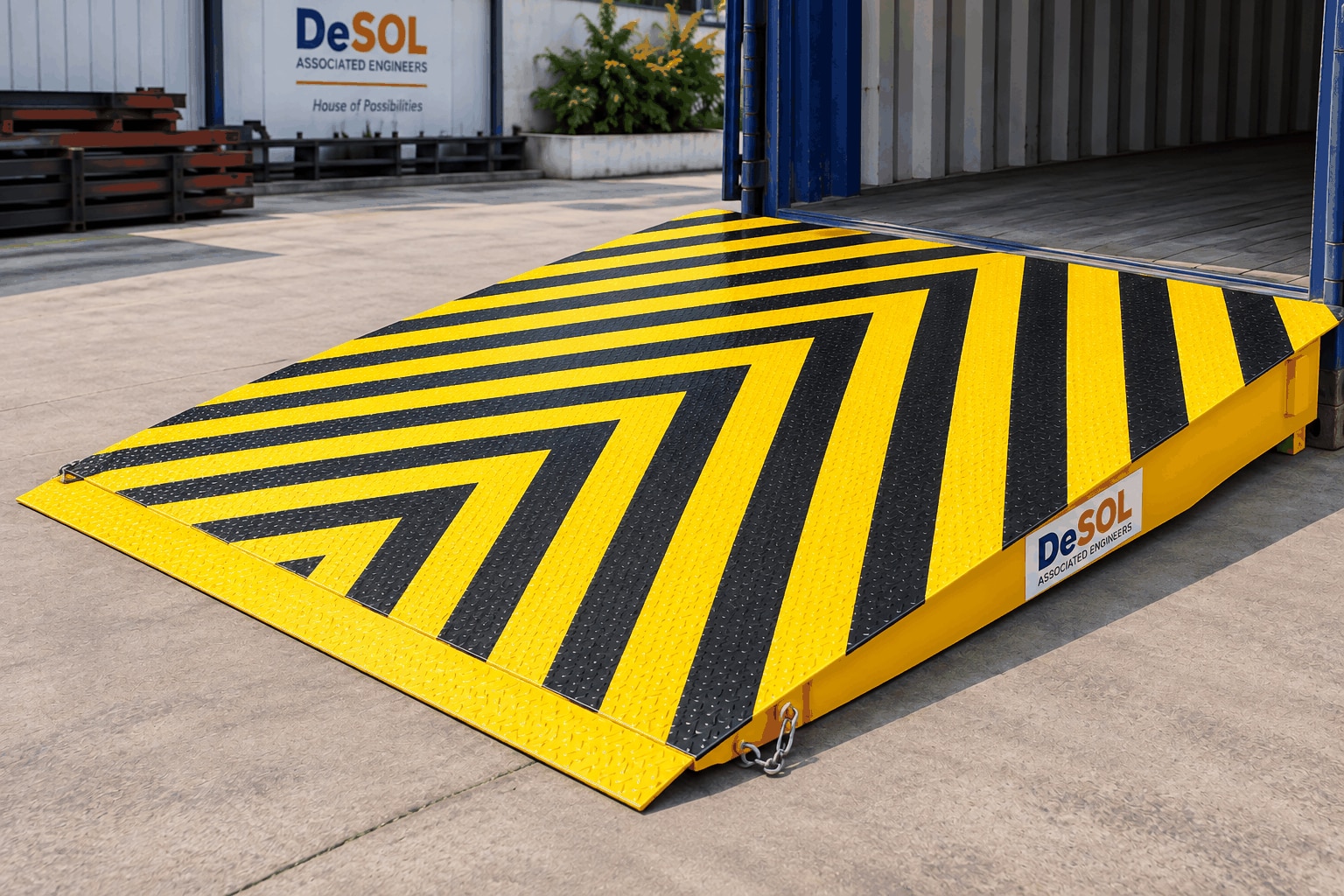 | Material Handling Equipment / Mobile Loading Ramp Portable Ramp for Container Loading and Unloading DeSOL Portable Ramp is a heavy-duty mobile loading and unloading solution designed for efficient movement of goods, forklifts and material handling... View product → |
Frequently asked questions
What should a material handling safety assessment identify?
Map the route from receiving to storage, production, and dispatch. Record the loads, exposed workers, changes in direction or height, and tasks where a control failure could cause the greatest harm.
How do you verify that equipment fits a load?
Check the load’s weight, dimensions, centre of gravity, lifting points, and required travel path. Compare those details with rated capacity, platform size, turning space, overhead clearance, and floor capacity.
How do you choose between a ramp, dock leveler, and dock lift?
Use a ramp when the height difference and approach allow a safe incline. Use a dock leveler to bridge a vehicle-to-dock gap, and a dock lift when you need controlled vertical movement between different elevations.
How can equipment improve traffic safety inside a facility?
Specify pedestrian barriers, marked crossings, speed controls, mirrors, warning devices, and separate travel lanes. Design these controls around blind corners, reversing areas, loading zones, and suspended-load paths.
Related products
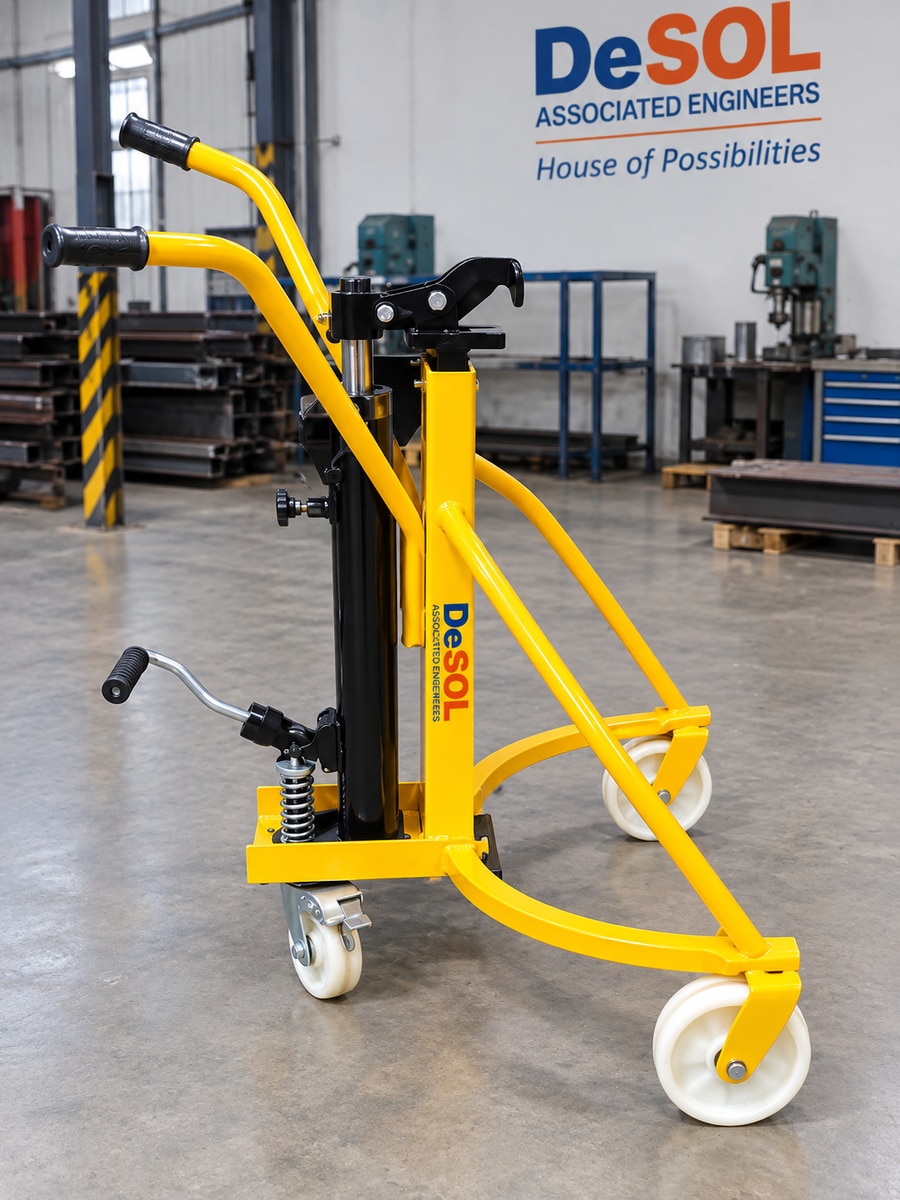 | Drum Trolley / Drum Handling Equipment / Material Handling Equipment Drum Trolley is a compact and durable material handling solution designed for safe lifting, tilting, positioning and transportation of industrial... View product → |
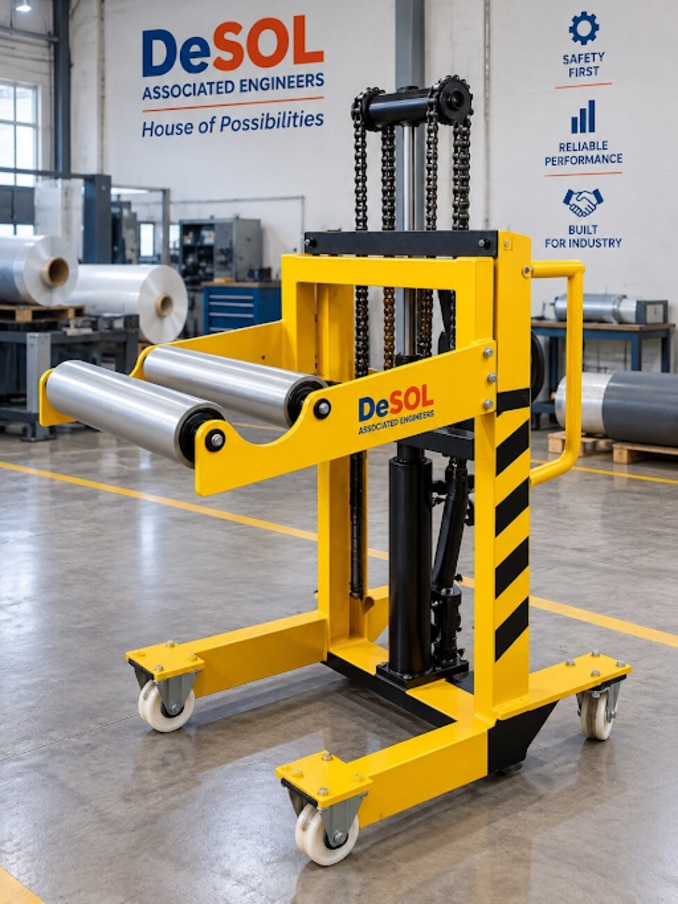
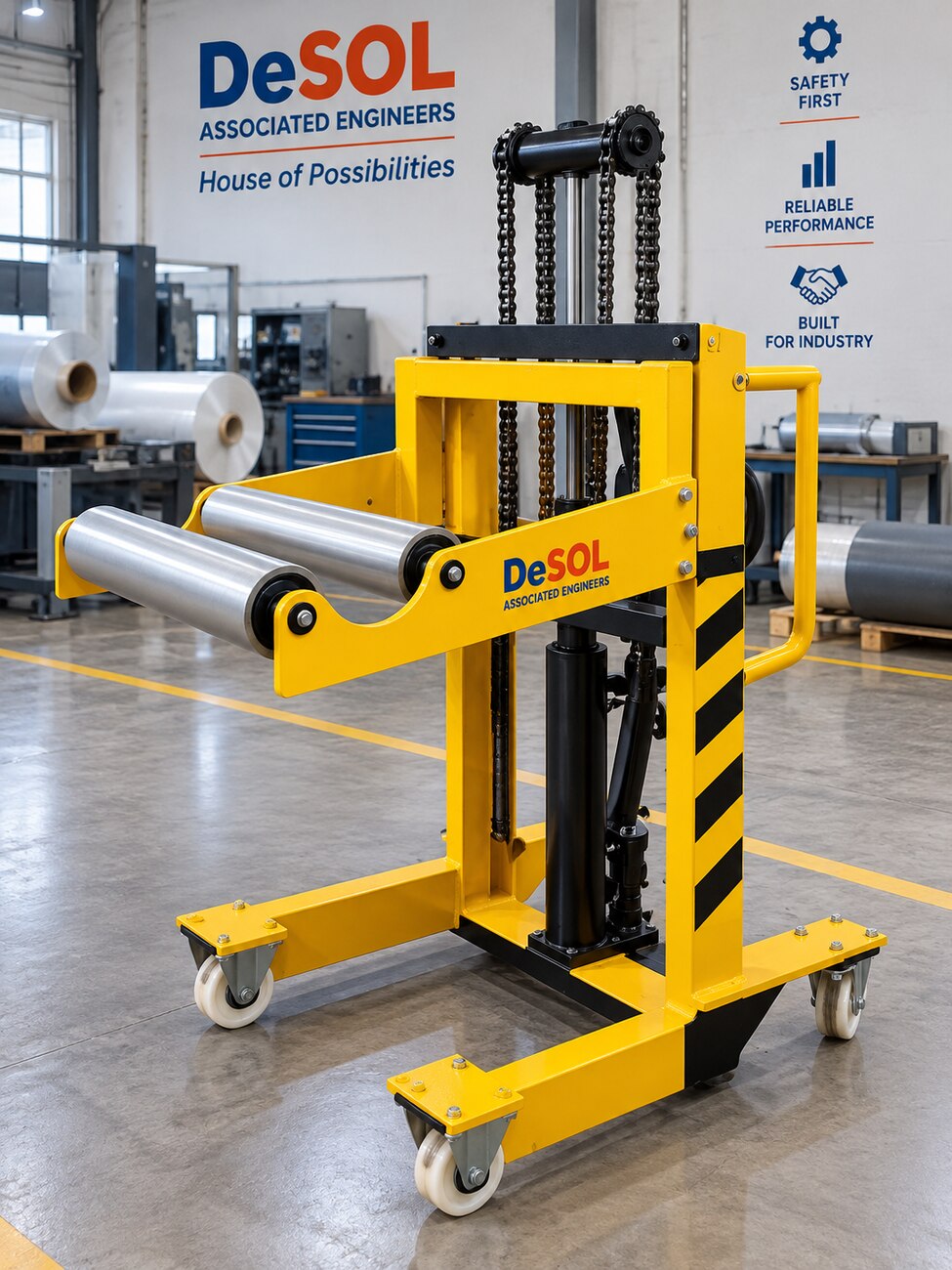 | Roller Trolley / Roll Handling Equipment / Material Handling Equipment Roller Trolley is a heavy-duty material handling solution designed for the safe and efficient handling, lifting and movement of cylindrical rolls in... View product → |
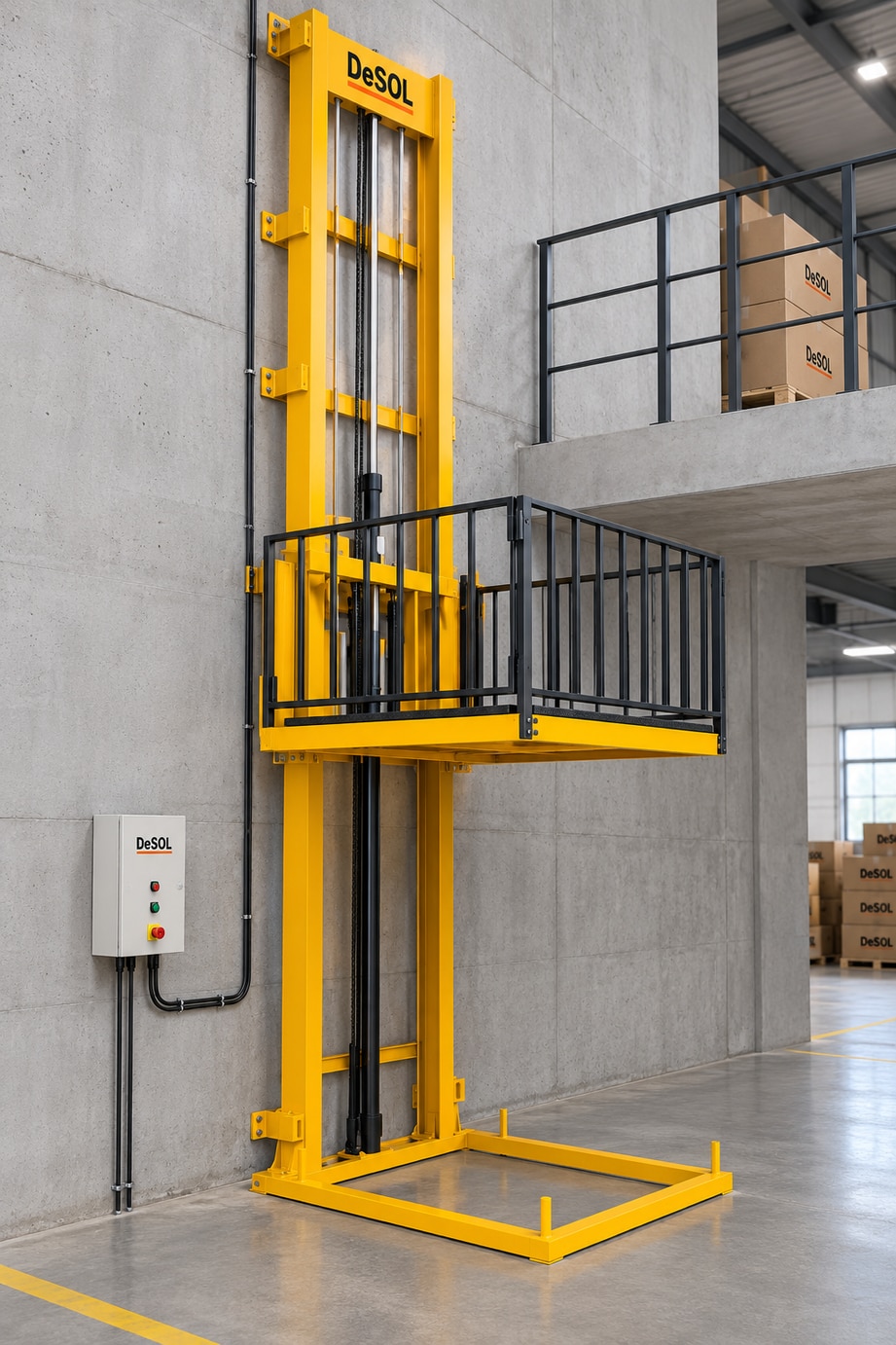 | Goods Lift / Material Handling Equipment DeSOL Single Mast Goods Lift is a compact and economical vertical lifting solution designed for safe and efficient movement of goods between... View product → |
 | A Hydraulic Dock Leveler is a high-performance loading dock solution designed to bridge the gap between a warehouse loading bay and a truck or... View product → |