Choosing an overhead crane starts with the load spectrum and the building, not the maximum weight on a product brochure. By the end, you will have a practical way to select the crane configuration, calculate its required capacity, match its duty class and controls to the workflow, and define an acceptance test before purchase.
Key takeaways
- Define the complete suspended load, including slings, grabs and lifting beams.
- Check runway geometry, headroom, column spacing and building load limits.
- Select duty class from lifts per hour, load spectrum and operating shifts.
- Specify hoist speed, travel controls, power supply and safety features together.
Start With the Load Case, Not the Crane Capacity
A quotation based only on the heaviest product can produce the wrong crane. Define the complete suspended load and the work pattern before discussing capacity, configuration or price.
1. Record the maximum lifted load and average load separately. Include the product, pallet or container, hook block, spreader beam, magnet, grab, lifting beam, slings and shackles. Ask the supplier to state whether the crane’s rated capacity covers the entire suspended load, not just the payload.
2. Measure load dimensions, centre of gravity and lifting-point locations. Note loads that are long, flexible, unbalanced or difficult to guide, because they affect hook position, headroom and load swing.
3. Record load frequency: lifts per hour, working hours per shift, shifts per day, operating days per year and the expected design life. State the percentage of lifts near maximum capacity and the percentage at average load.
A crane that rarely lifts its maximum can need a different duty class from one that repeatedly handles near-rated loads; CMAA Classes A through F range from standby to continuous industrial service.
4. Describe the movement itself. Give required hoist height, travel distance, positioning accuracy, acceleration limits and whether operators must place loads into racks, vehicles, machines or narrow bays.
5. State future capacity requirements and the environment: indoor or outdoor location, washdown, dust, heat, cold, corrosion, wind, rain, condensation and available maintenance access. These details prevent a technically adequate crane from failing the process or its surroundings.
Match the Crane Configuration to the Building
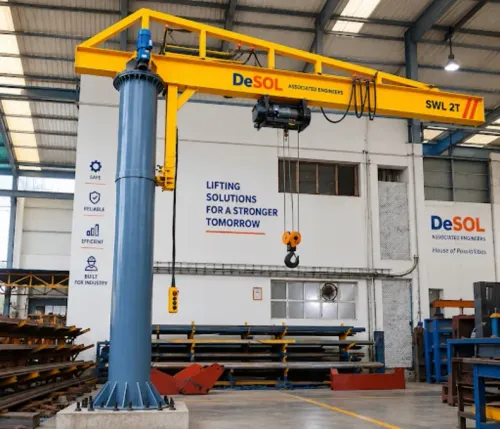
Choose the crane around the building’s clearances and load path: span sets bridge length, while hook approach, headroom and runway support determine the usable configuration.
A single-girder crane suits moderate spans and lighter duty where reduced self-weight and lower purchase cost matter. Choose a double-girder crane for heavier loads, longer spans, greater lifting height or a trolley that must travel above the girders. Do not select by rated capacity alone; the deeper arrangement can consume overhead clearance.
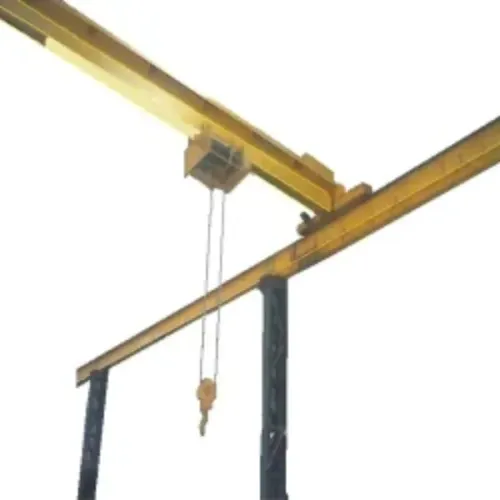
A top-running crane travels on rails mounted above runway beams, giving strong capacity and better hook coverage. An under-running crane hangs from the underside of roof-supported runway beams and can fit buildings where floor-level columns or machinery obstruct the runway.
It needs a verified roof structure and enough beam stiffness; existing framing is not automatically adequate.
Use a gantry crane when the building cannot carry runway reactions or when outdoor service requires independent legs and rails. Its legs, floor rails and foundations still need checks for wheel loads, lateral surge, braking forces and alignment.
Before fixing the envelope, check these points:
- Measure the required hook approach to walls, columns, dock doors, racks and transfer points; end-truck length and hook-block width often limit reach before span does.
- Model roof bracing, sprinklers, lights, ducts, doors and maintenance access against the highest and lowest hook positions.
- Have an engineer verify vertical wheel loads, impact, fatigue, deflection and load transfer into existing columns or roof framing.
- State the selected design references, such as CMAA 70, CMAA 74 or ASME B30.2, rather than writing “industrial standard.”
Choose Duty Class From Real Operating Cycles
Base duty classification on the load spectrum and operating cycles, not the heaviest load on the hook. A crane that lifts 100% of rated capacity twice a shift has a different fatigue demand from one that lifts 70% repeatedly for eight hours.
| CMAA class | Operating pattern | Selection signal |
|---|---|---|
| A–B | Standby or light, with few lifts and long pauses | Occasional maintenance or infrequent handling |
| C | Moderate use across a normal shift | Regular production with mixed loads |
| D | Heavy use, frequent lifts and higher average loading | Repetitive manufacturing or warehouse flow |
| E | Severe service with high cycles and near-rated loads | Intensive process duty |
| F | Continuous industrial service at sustained high cycles | Crane is integral to nonstop production |
Record lifts per hour, average lifted weight as a percentage of rated capacity, operating hours per day, and the required design life in years. Multiply the cycle rate by planned operating time to estimate total hoisting cycles; include trolley and bridge travel cycles if your supplier’s fatigue method requires them.
Choose the class from that complete profile. A crane that occasionally reaches full capacity may need a lower class than one that repeatedly carries 80–90% of capacity.
Ask the manufacturer to show the assumed load spectrum, total cycles, and design life in the quotation; otherwise two cranes with the same safe working load can have very different service lives.
Specify Hoisting, Travel, Controls and Power for the Workflow
Set each motion speed from the process, not from the crane’s maximum capability. A fast hoist wastes time if operators must slow repeatedly to place a load accurately; excessive trolley or bridge speed increases swing, braking distance and structural impact.
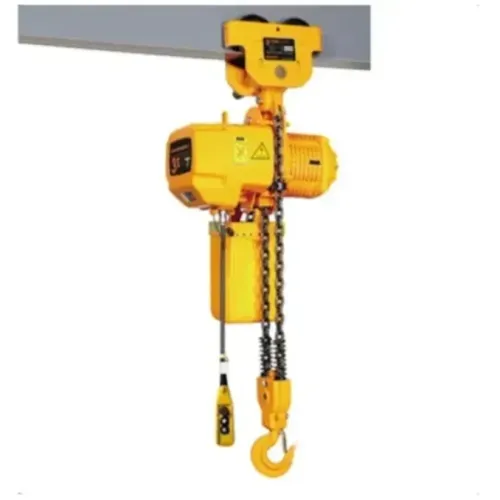
1. Select the hoist type and reeving from the load, lift height, duty class and available headroom. Wire-rope hoists suit heavier loads and longer lifts; chain hoists suit lighter, shorter lifts where compact construction matters. More rope falls increase mechanical advantage and reduce line speed, but add reeving, maintenance and hook-block height.
2. Specify hoist speed by required vertical travel and positioning tolerance. Use a slow approach speed, or dual-speed control, when loads enter machines, racks or moulds. Select trolley and bridge speeds from the distance between pickup and drop-off points, traffic separation and operator sightlines—not maximum travel speed.
3. Use independent variable-frequency drive control for hoist, trolley and bridge motions when smooth starts, controlled stopping or precise placement matters. VFDs reduce shock and swing, but you still need calculations for wheel loads, braking, impact and runway structure.
4. Choose pendant control when the operator must stay beside the load; provide an accessible emergency stop and protect the operator from the travel path. Choose radio control when visibility and mobility matter, then specify managed access, charging, battery storage and unauthorized-operation protection.
5. Specify voltage, phase, fault current, grounding, lockable disconnect, conductor or festoon system, collector wear limits and allowable voltage drop at the far runway end. Confirm the installation supply, not just the motor nameplate. Verify loaded and unloaded speeds, acceleration, braking, limits, hook position and controls during acceptance testing.
Turn the Selection Into a Verifiable Purchase Specification
Put these items in the purchase specification and make each one a document or test deliverable, not “industrial standard.”
1. Name the governing references: CMAA Specification 70 for multiple-girder cranes, CMAA Specification 74 for single-girder cranes, ASME B30.2 for top-running bridge and gantry cranes, and OSHA 29 CFR 1910.179 where U.S. workplace rules apply.
2. Require stamped runway and building checks for vertical wheel loads, impact, lateral surge, longitudinal forces, fatigue, deflection, alignment, and load transfer into existing columns or roof framing. Include clearances around roof bracing, sprinklers, lights, ducts, doors, and maintenance access.
3. List the rated load on both crane sides and require a lockable main disconnect, accessible pendant emergency stop, upper and lower hoist limits, brakes, overload protection, travel limits, bumpers, guards, and an audible or visual warning device where operating conditions require one.
4. Define temperature, humidity, dust, corrosive vapours, outdoor exposure, wind, washdown, and hazardous-area classification. Specify enclosure ratings, insulation, heaters, paint system, and corrosion protection instead of leaving the environment to the supplier.
5. Make acceptance a witnessed sequence: document review, no-load travel, hoist and brake operation, limit-switch checks, emergency-stop isolation, warning-device test, rated-load lifting, load positioning, and measurement of abnormal deflection or drift. Obtain inspection, maintenance, wiring, spare-parts, and operator manuals.
Desol Associated Engineers should receive this same checklist with the quotation, so competing crane offers can be compared on verified performance rather than capacity and price alone.
Related product
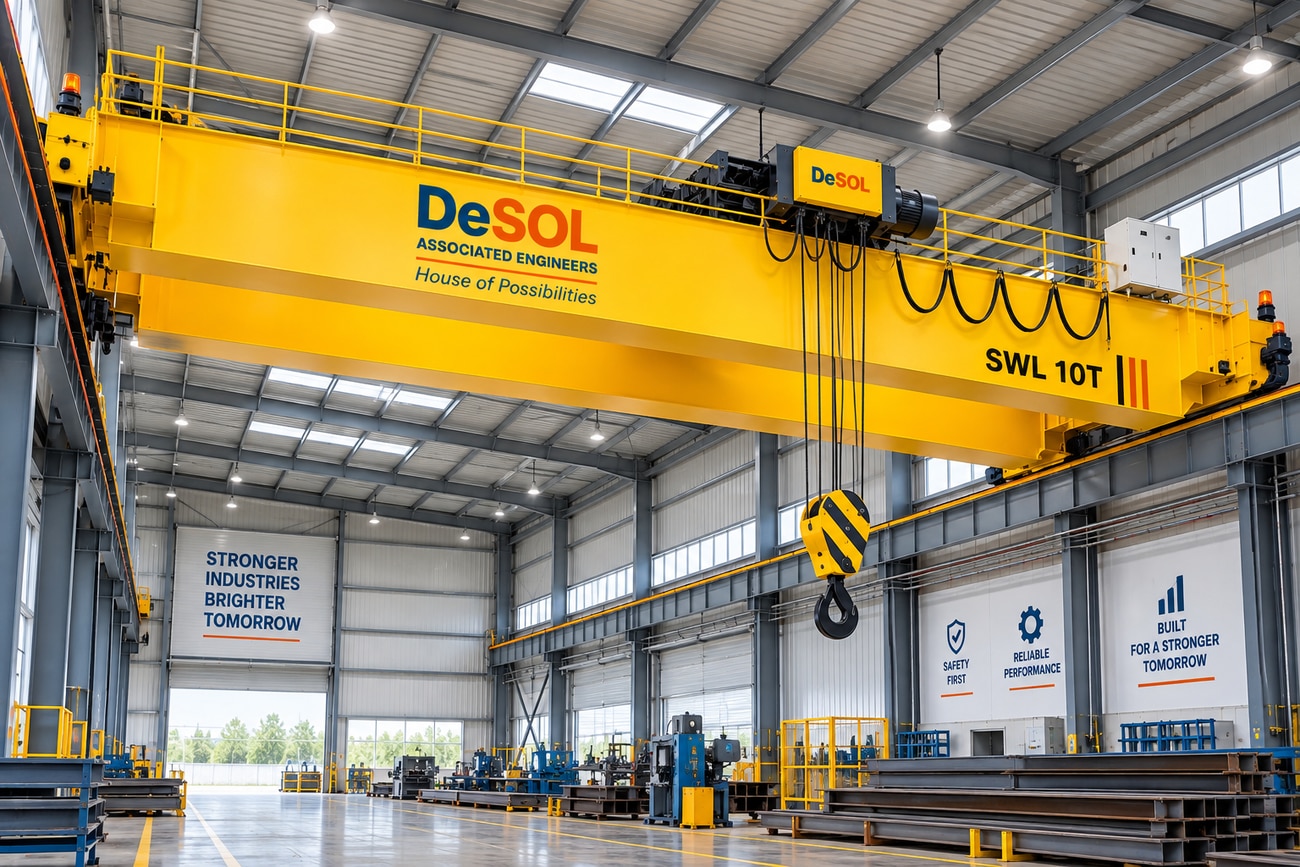 | EOT Crane / Overhead Crane / Industrial Lifting Equipment EOT Crane is a heavy-duty overhead material handling solution designed for lifting, lowering and horizontal movement of heavy loads across industrial... View product → |
Frequently asked questions
What information should you define before choosing an overhead crane?
Define the complete suspended load, including the product, lifting accessories and any below-the-hook equipment, then document lift frequency and movement requirements.
How do you match an overhead crane to an industrial building?
Check available headroom, runway length, bay width, column positions, roof structure and allowable building loads before selecting a crane configuration.
How do you choose the correct overhead crane duty class?
Base duty class on lifts per hour, average lifted load, load spectrum, operating shifts and the required service life—not the heaviest load alone.
Which crane specifications should you include in a purchase request?
Specify rated capacity, span, lift height, hoist and travel speeds, controls, power supply, duty class, safety devices, testing and documentation.