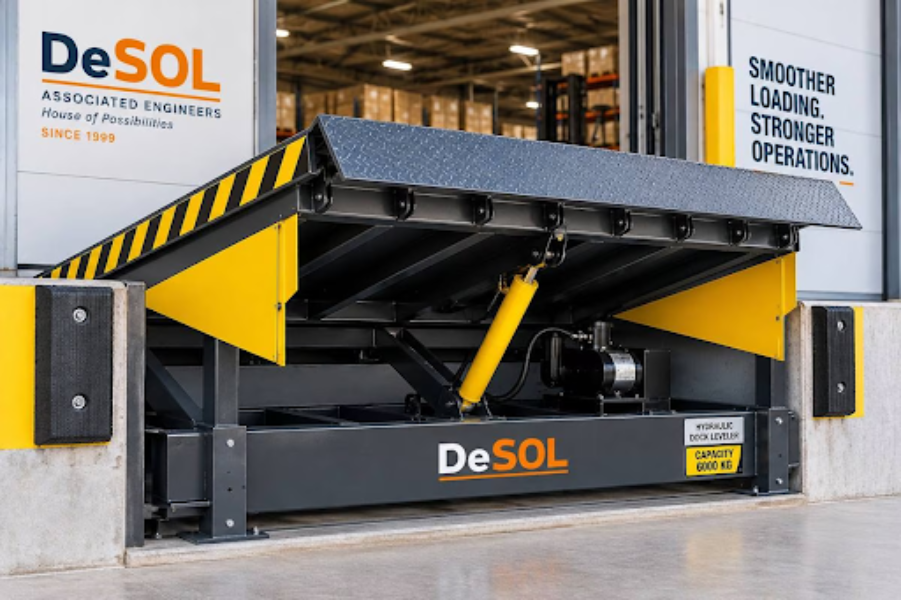
The transition between a loading dock and a vehicle may appear to be a small part of warehouse infrastructure, yet it can affect the speed and safety of loading operations throughout the day. A correctly specified Dock Leveler helps bridge differences between the dock floor and vehicle bed, allowing goods handling equipment to move through the loading point more efficiently.
Warehouses and logistics facilities in Noida, Uttar Pradesh should evaluate dock equipment around actual vehicle and loading conditions rather than selecting a standard unit without sufficient site assessment.
1. Choosing Capacity Without Considering Moving Loads
Rated capacity should reflect more than the static weight of the goods.
The combined weight of the load and handling equipment, along with the dynamic forces generated as equipment crosses the platform, should be considered during specification.
Forklift traffic, for example, creates different operating conditions from lightweight pallet handling.
2. Ignoring Vehicle Height Variation
Not every vehicle arriving at a warehouse has the same bed height.
A Dock Leveler should provide an operating range appropriate for the vehicles typically using the facility. If this is overlooked, the platform may not provide a practical transition for some deliveries.
Review actual fleet and supplier vehicle data before selecting the equipment.
3. Treating Every Loading Bay as Identical
Warehouses may have several bays serving different functions.
One could handle high-frequency dispatch while another receives occasional inbound materials. Vehicle sizes, loads, traffic frequency, and material handling equipment can differ.
Specifying every bay identically may therefore be inefficient.
4. Overlooking the Surrounding Dock Layout
The equipment does not operate in isolation.
Truck approach, dock height, door dimensions, internal traffic flow, pedestrian routes, staging space, and nearby storage all influence loading efficiency.
A leveler can only solve the vertical transition problem. Poor traffic planning around the bay can still create congestion.
5. Neglecting Maintenance Access
Loading equipment is exposed to repetitive movement and substantial working loads. Inspection and preventive maintenance are therefore important.
When evaluating a system, warehouse operators should understand how components can be accessed, which parts require routine inspection, and how maintenance can be performed with minimal disruption.
6. Selecting Only by Initial Price
Two quotations may look similar while differing significantly in capacity, platform dimensions, operating mechanism, safety features, installation scope, and support.
A meaningful comparison should establish exactly what is being supplied.
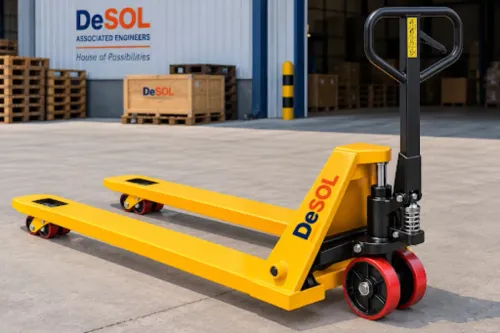
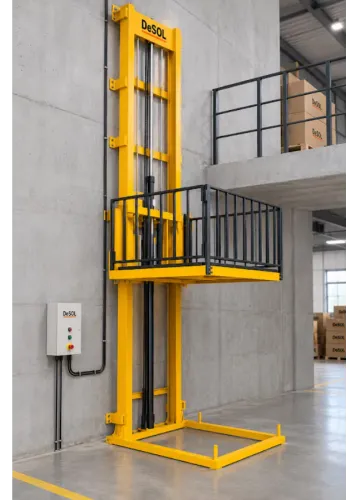
Desol Associated Engineers works with material handling requirements that include equipment for industrial loading and lifting operations.
For warehouse operators in Noida, choosing a Dock Leveler should begin with vehicle profiles, load weights, handling equipment, traffic frequency, bay dimensions, and operating conditions. These details make it possible to specify equipment around the real loading process.
Avoiding basic selection mistakes can help create a smoother connection between warehouse and vehicle operations. Rather than viewing dock equipment as a standalone accessory, businesses can treat the loading bay as part of the complete material flow from storage through dispatch.