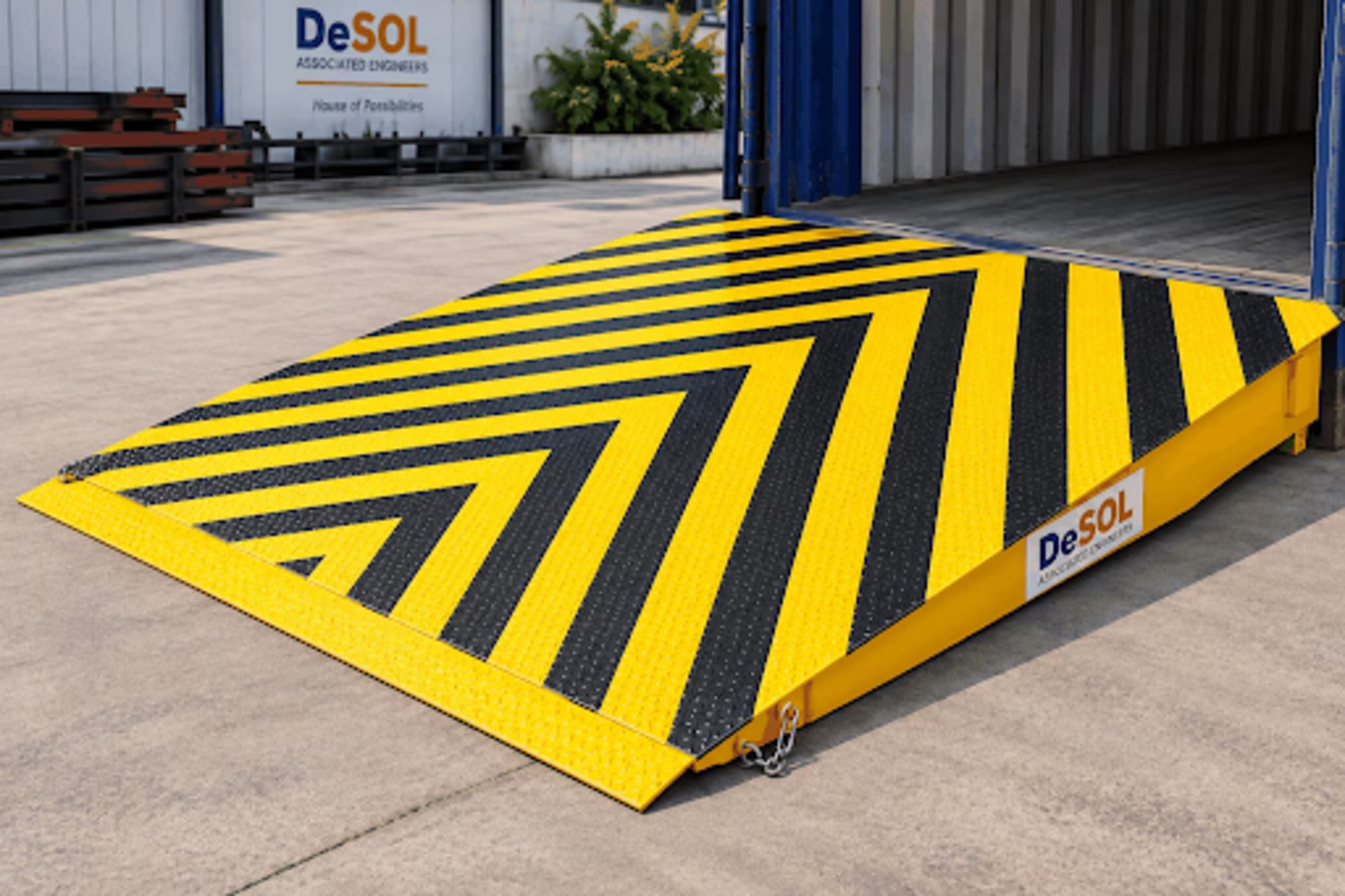
A ramp can meet a forklift’s advertised lifting capacity and still fail under the combined weight of the machine, attachment and payload. You will be able to calculate the required capacity, measure the real height and width constraints, set a workable slope, and turn those findings into a purchase specification.
Key takeaways
- Size capacity for the forklift, load and attachments crossing together.
- Measure the container floor height before choosing ramp length.
- Match clear ramp width to the forklift and load dimensions.
- Check wheel loads, traction and the container interface before use.
How do you calculate the ramp capacity your forklift actually needs?
Size portable container ramp capacity for the heaviest complete crossing, not the forklift’s lifting rating. Include:
- Forklift unladen weight
- Operator weight
- Forklift attachment weight
- Maximum payload
- Pallet, cage or handling fixture carried during the crossing
Use documented weights from the forklift, attachment and load records. The total is the moving mass the ramp must support.
Forklift rated capacity is different. Its data plate applies to a specified load centre and attachment configuration. A longer load-centre distance, changed load geometry or heavier attachment reduces the permitted payload under OSHA powered-industrial-truck rules, even when the nominal data-plate capacity appears adequate.
| Rating | Loading basis | Use |
|---|---|---|
| Forklift rated capacity | Load centre and attachment configuration | Controls the permitted payload |
| Ramp allowable total weight | Complete forklift, operator, attachment and load | Compare with total moving mass |
| Ramp axle or concentrated wheel-load limit | Force applied through an axle or individual wheel | Check separately; it is not interchangeable with total weight |
Compare the ramp rating with the manufacturer’s stated loading basis. Ask for the allowable total weight, axle load and concentrated wheel-load limits.
For a conservative design check, use the heaviest operating configuration, then verify the manufacturer’s stated safety factor and load-distribution assumptions. A ramp that passes the total-weight calculation can still fail when a transition concentrates force on one axle or wheel.
How do you measure container height and calculate the correct ramp length?
Measure the container ramp height from the actual ground contact area to the container floor, not from a nearby paved surface. Repeat the container ramp height measurement at the lowest and highest operating conditions.
- Place the container and ramp on the surface where the forklift will work.
- Measure ground-to-floor height at both ends of the container, including the door sill or threshold.
- Allow for uneven ground, forklift suspension movement, ramp settling and any change caused by wheel chocks or supports.
- Use the greatest measured rise, then verify the lip length, threshold support and transition angle.
For ramp slope calculation, use horizontal ramp run, not the sloping ramp length:
Grade percentage = vertical rise ÷ horizontal run × 100
A 48-inch rise at a 10 percent forklift grade requires 480 inches, or 40 feet, of horizontal run. The sloping ramp angle is about 5.7 degrees.
Check that result against the forklift manufacturer’s gradeability, traction and braking limits for the actual truck, load and surface.
| Check | What it establishes | What it does not establish |
|---|---|---|
| 10 percent forklift grade | A geometric slope calculation | That every forklift can use it safely |
| OSHA rule | A loaded forklift on a grade greater than 10% travels with the load upgrade | Permission to operate on every 10% ramp |
| Short ramp | Less space and lower purchase effort | Safe approach, braking or clearance |
A ramp that is too short creates a steeper approach, wheel spin, longer braking demand, underbody contact and fork or load clearance problems.
What clear width and container interface dimensions must the ramp have?
Specify the portable ramp clear width from the forklift’s overall width and outside wheel-track width, then add room for load overhang, tire deflection, steering corrections and edge margins. Check the load’s widest point, not only the truck body.
An advertised overall ramp width is not the driving width. Ramp side curbs, raised edges, guide rails, hinges, supports and surface rails consume usable space. Require the supplier to state the clear width between the inside faces of every obstruction.
Measure these interface dimensions before selecting the ramp:
- Container door sill height at the actual loading position, including threshold thickness.
- Ramp lip length and thickness, and the supported point where the lip rests.
- Ramp-to-ground contact points at both ends, including uneven or settled ground.
- Transition angle at the ground end and container end, with the forklift’s undercarriage and load clearance checked.
- Container floor and threshold condition, including damage, bending and the structural member supporting the lip.
A capacity-compliant ramp can still bottom out or lose wheel contact when its lip does not match the threshold. Excessive transition angle can strike the chassis, forks or load as wheels leave or climb onto the ramp.
Include the container floor and threshold in the load path. Confirm that the lip bears on a supported structural member, not a thin door sill, damaged threshold or unsupported floor edge. A ramp that fits the forklift can still overload the container interface.
How do you check wheel loads, traction and transition safety before use?
Obtain the forklift manufacturer’s forklift axle load data for the heaviest operating configuration, including its attachment and payload. Identify the worst wheel or axle condition as the truck enters, crosses and leaves the ramp; that dynamic wheel load, not four nominal wheel loads, controls the check.
1. Compare each forklift axle load and ramp point load with the ramp rating. Four equal wheel loads are insufficient because the ramp may support only part of the machine during transition, concentrating force at one wheel or axle.
2. Inspect undercarriage clearance, ramp crown, hinges, lips and both landing transitions. Pay special attention to breakover contact: the front wheels leaving the ramp and the rear wheels climbing onto it can make the chassis, forks or load strike even when the grade is acceptable.
3. Treat the ramp traction surface as a specification. Expanded metal or serrated plate can improve grip and drainage, but remove oil, mud, ice, shrink-wrap and pallet debris before use, then inspect for blocked openings or damaged texture.
4. Secure the ramp with anchoring or anti-slip devices, and use handholds or another safe handling method during placement. Do not rely on ramp weight to prevent movement.
5. Immobilise the container, truck or trailer before traffic begins: set its brakes and install wheel chocks or equivalent positive protection. Confirm that the container floor and threshold support the forklift axle load and that the lip bears on a structural member, not only a thin sill or unsupported edge.
What should you put in the ramp purchase and inspection specification?
A ramp purchase specification must capture the actual machine and site, not just say “heavy duty.” Use the same information for your portable ramp inspection checklist before each shift.
1. Record the heaviest forklift configuration: unladen truck, operator, attachment, payload, pallet, cage or fixture; total moving weight; maximum axle load; and maximum concentrated wheel load.
2. Record the required clear driving width between curbs, rails, hinges and supports; the lowest and highest measured rise; calculated horizontal run; door-sill and threshold dimensions; lip length; approach and departure transitions; and undercarriage clearance.
3. Describe the surface condition, including wet-weather use, oil, mud, ice, shrink-wrap and pallet debris. State the required restraint method, such as rated anchors, chocks or anti-slip devices, and immobilise the receiving container, truck or trailer before traffic begins.
4. Ask the manufacturer to state the rating basis, ramp safety factor, permitted load distribution, maximum grade, allowable axle and wheel loads, lip bearing requirements, support-leg details and inspection criteria. Do not treat total capacity, axle capacity and wheel capacity as interchangeable.
5. Inspect the receiving container or vehicle as carefully as the ramp. Confirm that the floor and threshold carry the wheel and axle loads and that the lip bears on a supported structural member, not a thin sill or damaged edge.
6. Remove the ramp from service after impact, overload, distorted frame, cracked weld, bent curb, damaged traction surface or altered support leg. Return it only after the manufacturer or a qualified competent person approves it.
Desol Associated Engineers can help translate forklift data, container dimensions and operating conditions into an industrial material handling equipment specification; require written ratings and site measurements rather than relying on a generic description.
Related products
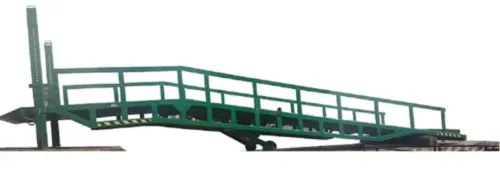
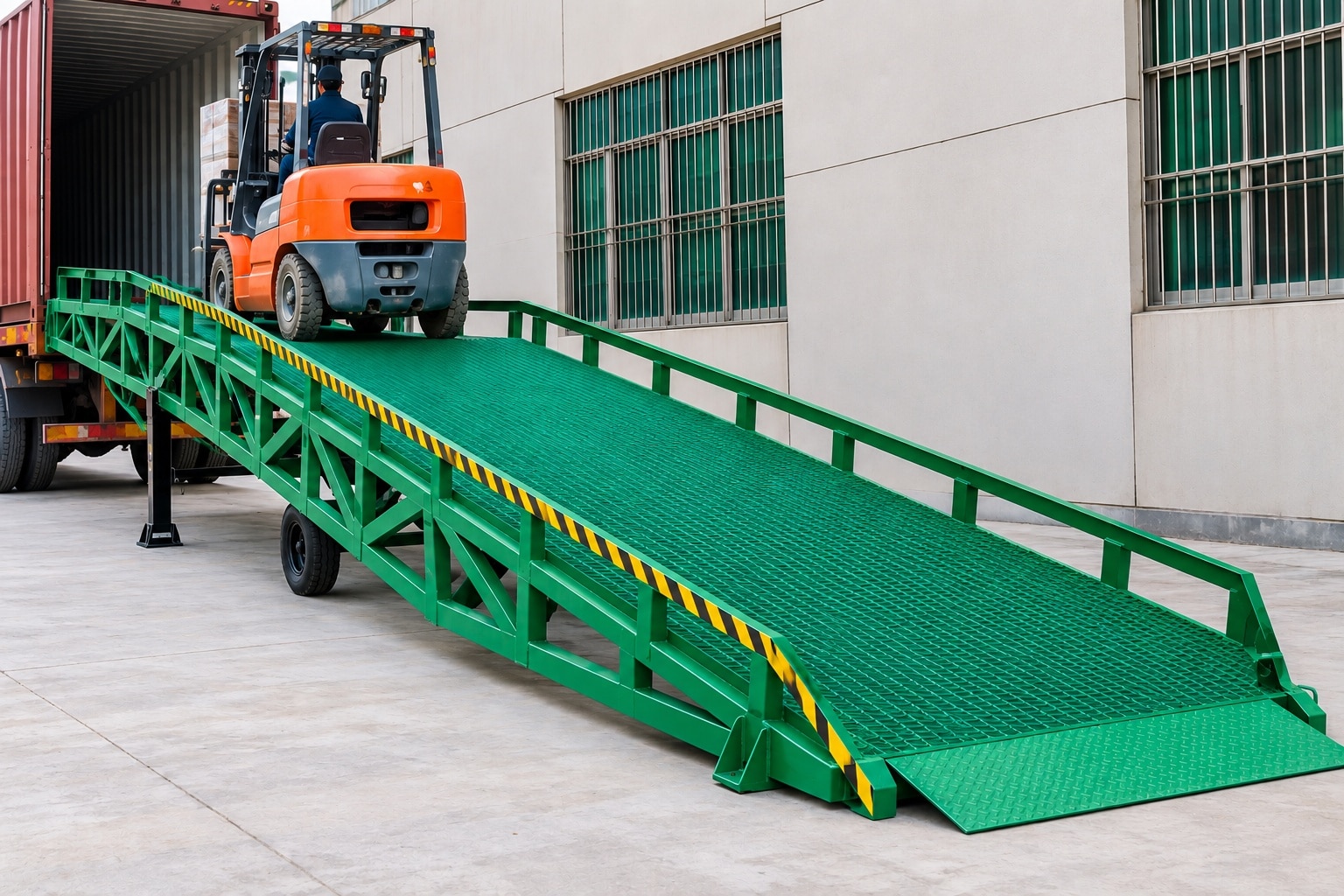 | Material Handling Equipment / Loading Ramp Portable Container Ramp The Portable Container Ramp by DeSOL Associated Engineers is a heavy-duty material handling solution designed to provide safe... View product → |
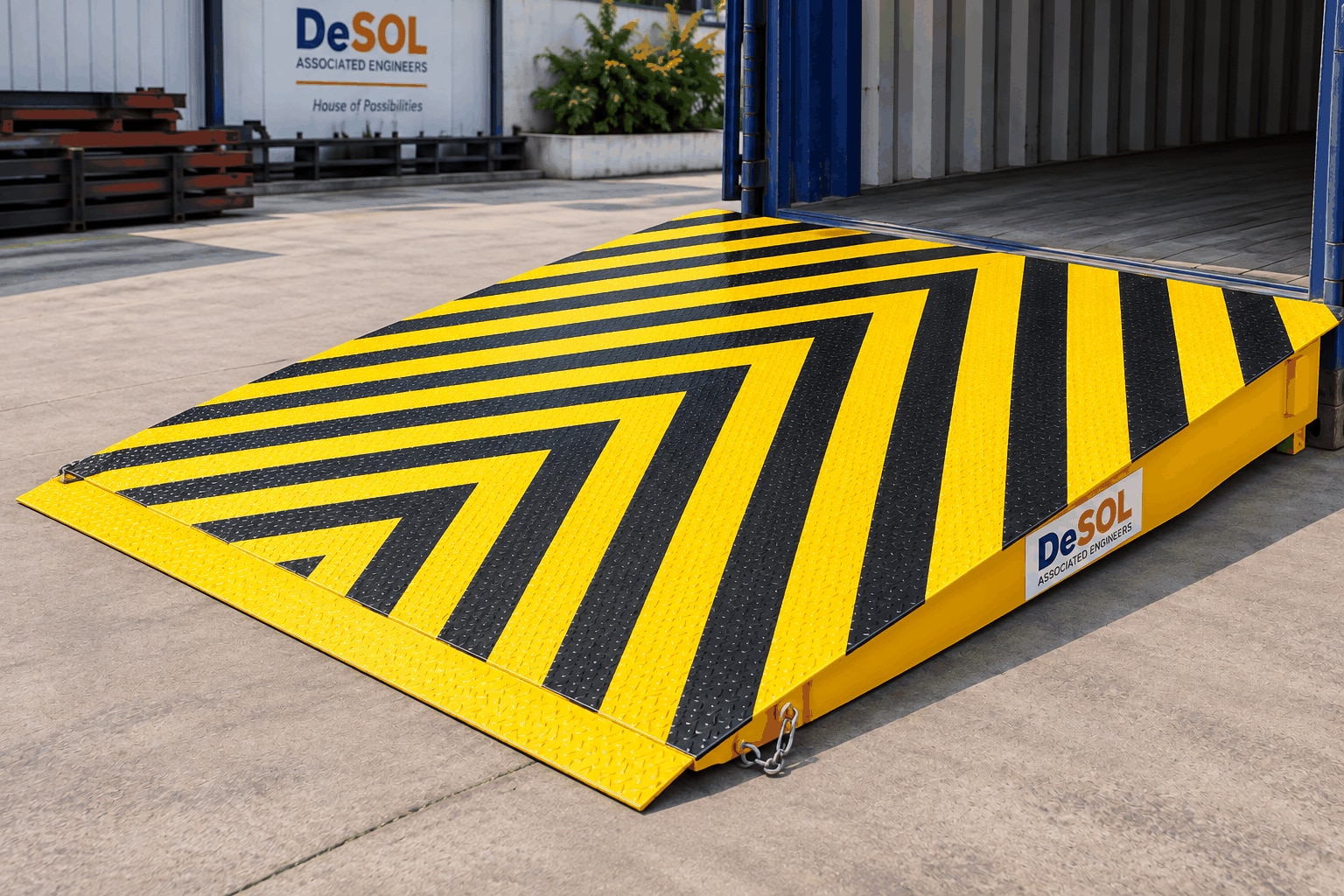 | Material Handling Equipment / Mobile Loading Ramp Portable Ramp for Container Loading and Unloading DeSOL Portable Ramp is a heavy-duty mobile loading and unloading solution designed for efficient movement of goods, forklifts and material handling... View product → |
Frequently asked questions
How do you calculate the ramp capacity a forklift actually needs?
Add the operating weight of the forklift, its heaviest carried load, attachments and any onboard materials. Size the ramp for the complete crossing load, then check the manufacturer’s rated capacity and safety margin.
How do you measure container height and calculate the correct ramp length?
Measure from the approach surface to the container floor at the entry point. Select a ramp length that keeps the resulting slope within the forklift manufacturer’s permitted grade and provides a smooth top transition.
What clear width and container interface dimensions must the ramp have?
Measure the forklift’s outside tyre or wheel width, load width and turning clearance. Confirm that the ramp’s clear width, lip, support points and container sill fit without side contact or movement.
How do you check wheel loads, traction and transition safety before use?
Check the forklift’s axle and wheel loads against the ramp rating, including concentrated loads. Inspect the surface for traction, secure the ramp against sliding, and verify that the approach and container transitions have no abrupt step.
What should you put in the ramp purchase and inspection specification?
Specify rated capacity, maximum wheel load, clear width, ramp length, usable height range, surface treatment, lip and restraint details, dimensions, inspection points and required documentation.