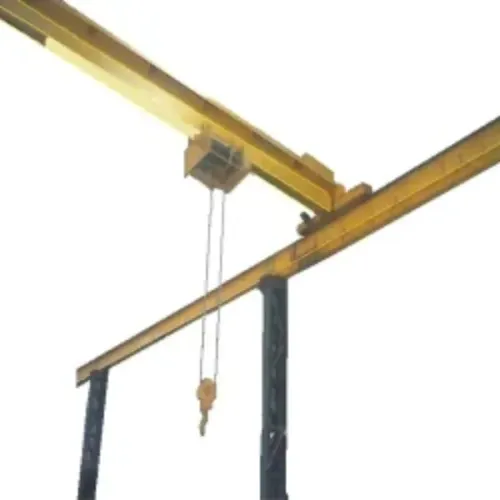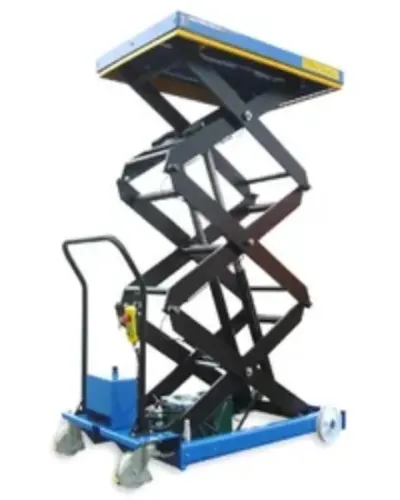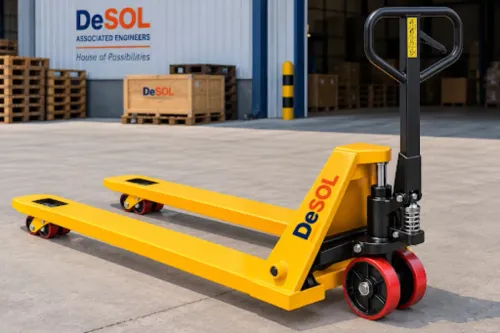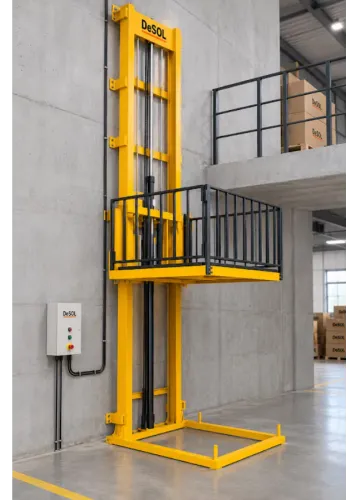

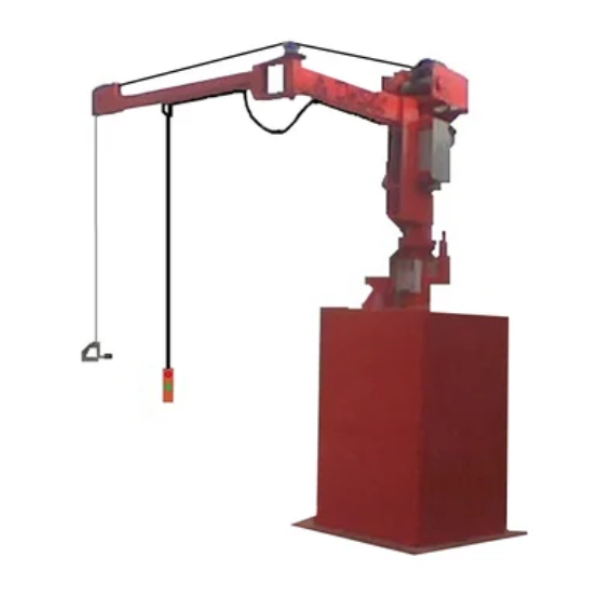
Large overhead cranes provide broad lifting coverage, but many industrial tasks happen within relatively small work zones. Operators may need to lift a component onto a machine, reposition an assembly, handle a tool, or transfer material across a limited radius. Installing a large crane for such localized movement may be unnecessary. A Jib Crane is designed for precisely these focused lifting applications.
In industrial areas of Greater Noida, Uttar Pradesh, manufacturing and engineering businesses often operate multiple workstations with different material handling requirements. Localized lifting equipment can complement larger plant-wide handling systems.
Understanding the Working Principle
A jib crane generally consists of a horizontal arm supporting a hoist. Depending on the design, the arm can rotate through a defined working area.
Different configurations may be floor-mounted, pillar-mounted, wall-mounted, or engineered around specific structural requirements.
The result is a compact lifting zone that allows an operator to move loads without requiring an overhead crane to serve every small task.
Where Jib Cranes Are Commonly Applied
Typical workstation applications include:
- CNC and machining areas
- Assembly stations
- Maintenance bays
- Fabrication workstations
- Loading positions
- Tool handling areas
- Component inspection stations
- Packaging operations
Imagine a machining area where heavy components repeatedly need to be positioned onto a machine table. Using a distant overhead crane for every movement may interrupt other operations. A dedicated jib arrangement can keep that lifting function closer to the workstation.
Working Radius Matters
Capacity is important, but the crane's useful working radius deserves equal attention.
A crane may technically lift the required load but still be unsuitable if its rotation and reach do not cover the necessary pickup and placement points. Equipment, columns, walls, racks, and operator positions should therefore be considered during layout planning.
Mounting Conditions Need Careful Evaluation
A floor-mounted crane transfers forces through its supporting structure and foundation. Wall-mounted arrangements depend on suitable structural support.
The available mounting condition should be assessed before selecting the crane configuration. Installing lifting equipment onto a structure without confirming its suitability can create operational and safety concerns.
Think About Frequency as Well as Weight
A workstation handling a heavy component twice per week has different requirements from an assembly line performing dozens of lifts per shift.
Frequency influences hoist selection, controls, lifting speed, and overall crane duty requirements. The weight and shape of the component also determine how it should be attached and controlled during movement.
Small Lifting Zones Can Have Large Operational Value
The purpose of a Jib Crane is not to replace every other crane in a facility. Its value comes from providing dedicated lifting capability exactly where repeated handling takes place.
Desol Associated Engineers works with material handling applications where lifting systems are planned around plant layout, load requirements, and operating conditions.
For manufacturing facilities across Greater Noida, workstation-level lifting deserves the same planning attention as larger crane systems. When the capacity, working radius, mounting arrangement, hoist configuration, and frequency of operation are properly matched, a jib system can reduce unnecessary material movement and create a more structured workflow around individual machines and production stations.