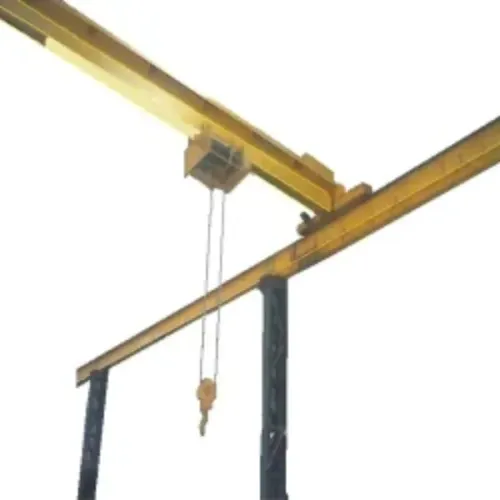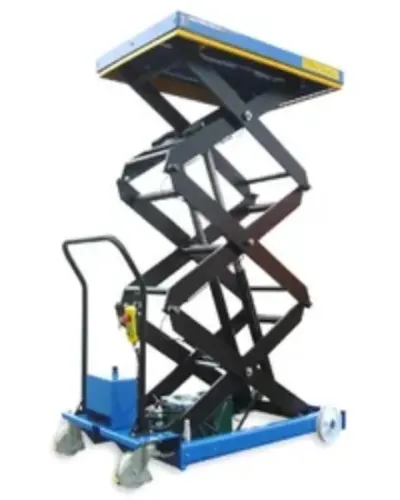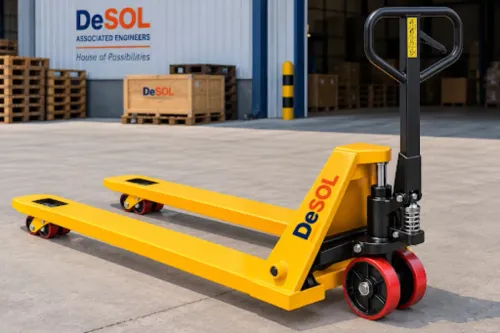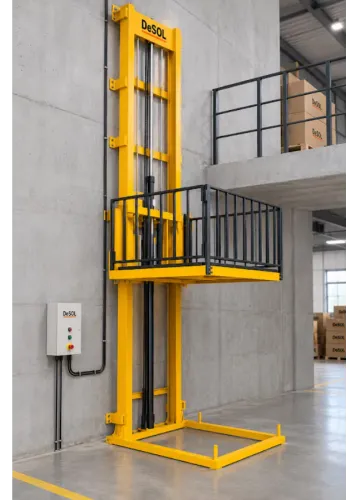
Standard lifting equipment works well when load sizes, building dimensions, travel paths, and production processes fall within conventional operating conditions. Industrial plants, however, are rarely identical. Restricted headroom, unusual spans, existing machinery, changing production lines, difficult load geometry, and specialized handling cycles can create requirements that standard equipment cannot address effectively. In such situations, Customized Crane Solutions deserve careful evaluation.
Manufacturing units in Faridabad, Haryana often operate within established facilities where new lifting equipment must integrate with existing production infrastructure.
Start With the Material Handling Problem
A custom crane should not begin with a preferred crane model. It should begin with the problem that needs to be solved.
Procurement and plant teams should document:
- Maximum and typical load weights
- Load dimensions and geometry
- Pickup and placement positions
- Required lifting height
- Travel distance
- Frequency of operation
- Existing structural restrictions
- Machinery and production layouts
- Future capacity requirements
This information allows equipment specifications to reflect real operating conditions.
Evaluate Headroom and Building Constraints
Factories with limited vertical clearance may require a different crane configuration from newly constructed facilities with generous headroom.
Columns, roof structures, ducts, utilities, machines, storage systems, and walkways can all influence crane movement.
Ignoring these constraints during equipment selection may result in insufficient hook height or restricted travel after installation.
Compare Standard Equipment With Custom Engineering
Customization should solve a defined operational requirement rather than add complexity without purpose.
A standard crane may be preferable when it satisfies the required capacity, span, height, and duty. A customized system becomes more relevant when standard configurations cannot achieve suitable coverage, clearance, control, load positioning, or integration.
The evaluation should therefore consider both capital cost and operational suitability.
Consider Future Production Changes
A crane may remain in service much longer than the production line it initially supports.
Before finalizing Customized Crane Solutions, businesses should consider whether expected production expansion could change load capacity, working area, travel requirements, or material flow.
Designing solely around today's minimum requirement can create limitations later.
Maintenance Accessibility Is Important
Custom equipment should remain practical to inspect and maintain. Components that are difficult to reach can increase maintenance complexity.
Ask how critical components will be accessed, what routine inspections are required, whether commonly serviced components are readily available, and how maintenance can be performed without unnecessarily disrupting production.
Assess the Supplier's Engineering Approach
Desol Associated Engineers works with industrial crane and lifting requirements where equipment specifications need to reflect site conditions and operational demands.
For businesses in Faridabad, evaluating a customized system should involve more than comparing quotations. A useful proposal should demonstrate an understanding of load movement, site dimensions, structural conditions, duty requirements, controls, safety considerations, and installation constraints.
Customized Crane Solutions provide the greatest value when customization has a clear engineering purpose. Instead of forcing a standard machine into an unsuitable environment, the lifting arrangement can be developed around how materials genuinely need to move through the plant. That alignment between equipment and workflow is the key factor procurement teams should evaluate.